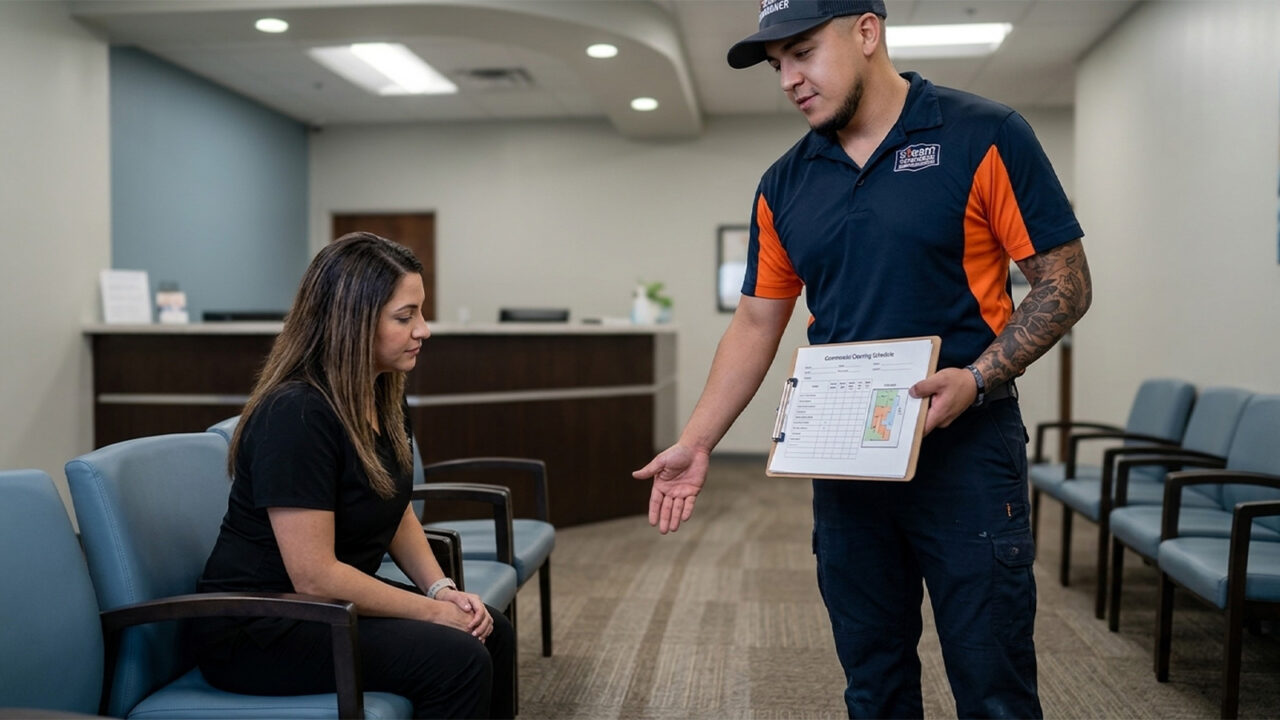
Clean waiting room and entry carpets every 30 days. Clean exam room hallways every 60 to 90 days. Low-traffic staff areas can go 90 to 120 days between cleanings. A compliance officer or accreditation reviewer may ask how your facility handles floor care. That schedule is your answer. But it needs to come from a written commercial carpet cleaning program, not a guess. In a medical setting, carpet cleaning isn’t just housekeeping. It’s an infection control point. Treat it that way from the start.
For facilities managers in Houston and Cypress, this isn’t just a housekeeping choice. It’s part of running a clinic that passes inspection and keeps patients safe. A written commercial carpet cleaning plan gives you proof on paper. Hand it to a compliance officer or accreditation reviewer, and you have a quick answer: how often floors get cleaned, and who does it. The stakes are higher here than in a retail store or a normal office. Your cleaning standard should match that.
Key Takeaways
- Waiting rooms and busy entries need professional cleaning every 30 to 60 days; exam hallways need it every 60 to 90 days
- Hot water extraction best matches IICRC guidance for healthcare settings. It lifts deep dirt and germs without leaving heavy residue behind
- Any carpet touched by bodily fluids needs an EPA-registered disinfectant from EPA List N, following OSHA Bloodborne Pathogens Standard rules
- After-hours and zone-based scheduling lets cleaning happen without disrupting patient appointments at all
- Houston’s 75 to 90 percent humidity makes fast, documented drying time a compliance issue, not just a nice-to-have
Why Medical Offices Need Different Standards Than Retail or Office Spaces
A carpet in a retail store gets cleaned to look nice. A carpet in a medical office gets cleaned to cut down on germs. That difference changes everything about how the job should be done.
Patient Vulnerability and Liability Exposure
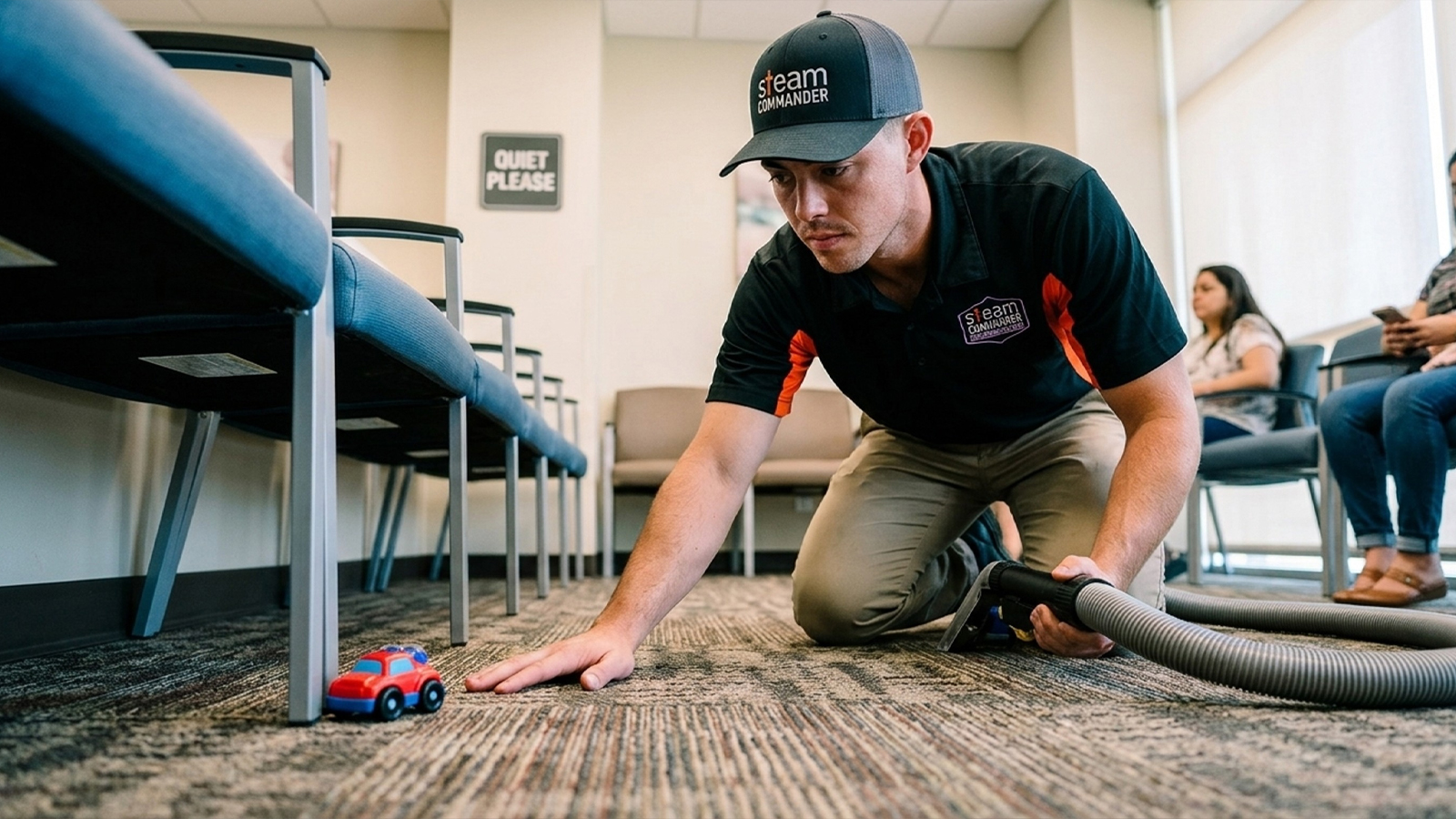
People walking into a clinic or urgent care are often more vulnerable than the average shopper or office worker. Some have weak immune systems. Some are recovering from surgery. Kids crawl on waiting room floors, drop toys, and pick them back up. That contact raises the risk of spreading germs in ways regular office cleaning was never built to handle. A clinic also carries more legal risk than most businesses if an infection outbreak traces back to a dirty space. Retail stores and offices don’t carry that same weight.
How CDC Guidelines Raise the Bar for Healthcare Facilities
CDC guidelines set the baseline that healthcare facilities must meet. That baseline goes well beyond what typical cleaning services deliver. Regular janitorial contracts usually cover trash removal, restrooms, and light vacuuming. Measurable germ reduction isn’t part of the package. A well-run clinic treats carpets as part of infectious control for healthy facilities, not as an afterthought. Carpets need tracking and cleaning on a schedule, not just when they look dirty. The Houston Health Department expects local healthcare facilities to keep sanitary conditions that match this standard. That puts carpet cleaning squarely inside your compliance picture, not outside it. Facilities working toward Joint Commission standards will find this kind of documented floor care fits naturally into a broader environment-of-care record.
How Often Should Medical Office Carpets Be Cleaned for Infection Control? (Frequency by Area)
Not every carpeted area in your clinic carries the same risk of contamination. One cleaning schedule for the whole building misses the point. Areas near outside entries and general foot traffic need more attention than staff-only hallways.
Frequency by Zone
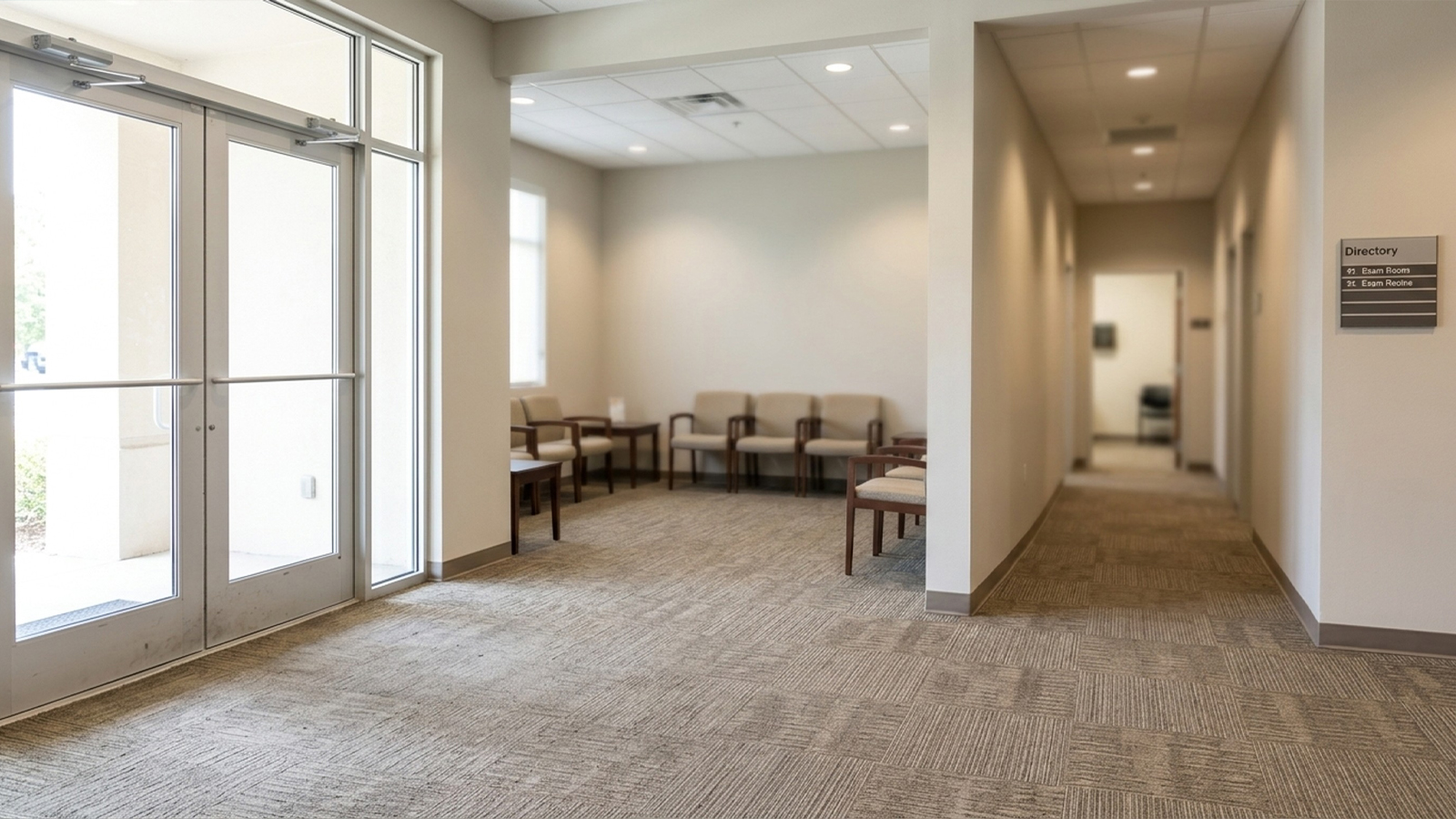
Waiting rooms and entries pick up the most outside dirt and germs first. Every patient, visitor, and delivery person walks through them. Exam room hallways see steady foot traffic but far less debris tracked in from outside. Staff-only areas see the least traffic overall and can safely go longer between cleanings.
| Area | Recommended Cleaning Frequency |
| Waiting rooms / entries | Every 30 days |
| Exam room hallways | Every 60-90 days |
| High-traffic restroom-adjacent carpet | Every 30-45 days |
| Staff-only low-traffic areas | Every 90-120 days |
Houston has heavy foot traffic all year. Add the outdoor humidity people track in on their shoes, and many practices need the shorter end of these timeframes. Take a pediatric clinic near a busy Cypress shopping area. It will likely need waiting room carpets cleaned closer to every 30 days than every 60. That’s simply because so many people pass through. Build this schedule into your compliance records as part of a bigger carpet maintenance plan. Then you’ll have a solid answer any time someone asks how your facility handles floor care.
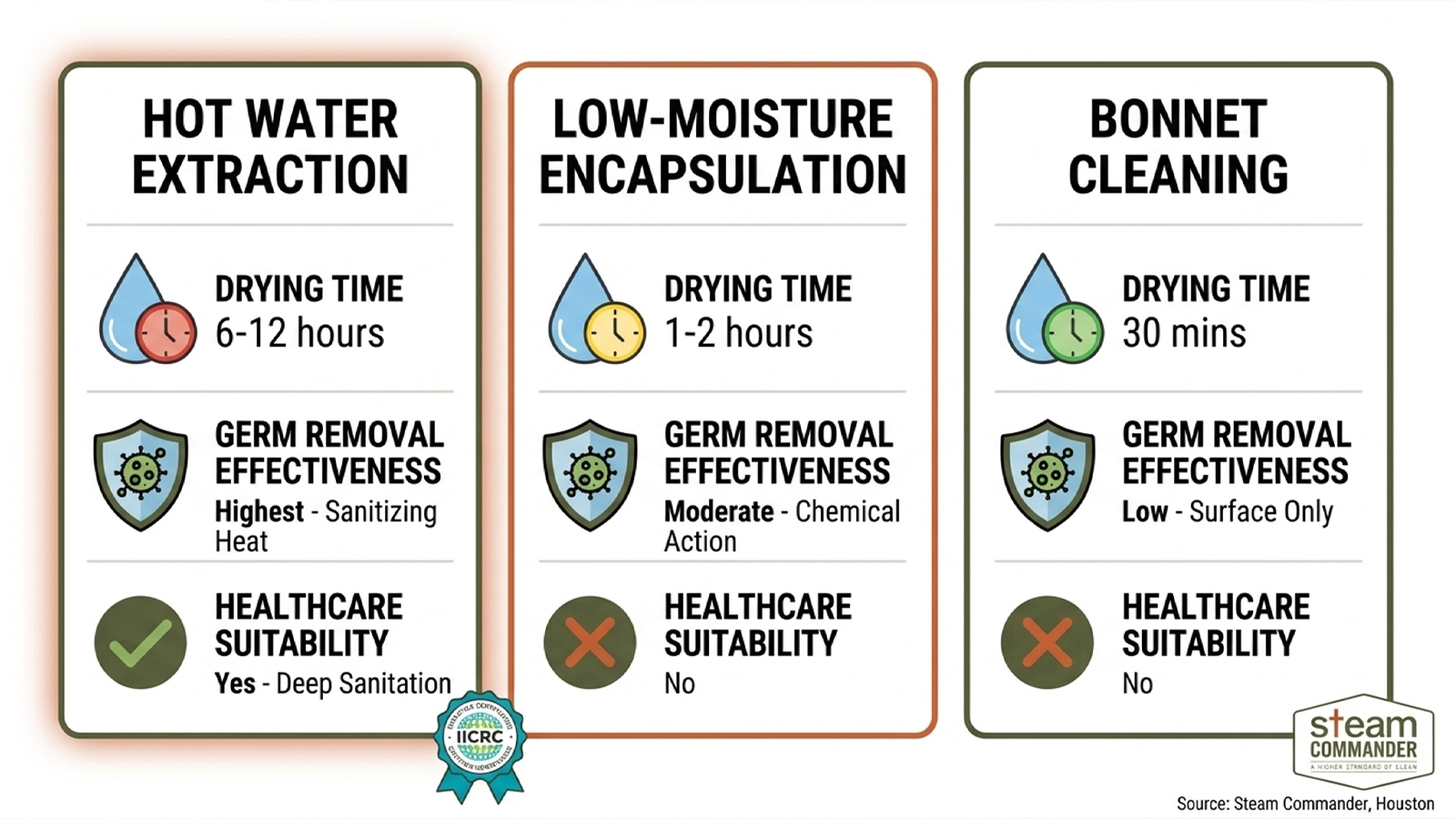
What Floor Care Method Is Safest for Healthcare Facilities? Hot Water Extraction vs. Low-Moisture Encapsulation vs. Bonnet Clean
Choosing the right method matters more in a clinical setting than almost anywhere else. Get it wrong, and germs get left behind. Get the drying wrong, and mold gets a head start.
Hot Water Extraction (Steam Cleaning)
Hot water extraction, often called steam cleaning, pushes heated water and cleaning solution deep into carpet fibers. Then it pulls the water back out along with the dirt, allergens, and much of the germ load. Many see it as the deepest clean you can get. It also best matches commercial cleaning standards for healthcare settings. The downside is drying time, which needs careful management in a humid place like Houston. Steam Commander uses truck-mounted extraction with strong airflow support to shorten that window. That way, a waiting room isn’t sitting damp overnight.
Low-Moisture Encapsulation Cleaning
Low-moisture encapsulation uses a cleaning compound that hardens around dirt particles as it dries. Those particles then get vacuumed away. Drying time is much shorter, which makes it a good option for areas that can’t stay closed for long. The sanitation isn’t quite as deep as hot water extraction, though. Because of that, some clinics use it as a touch-up between main services rather than as the main method.
Why Bonnet Cleaning Falls Short for Clinical Settings
Bonnet cleaning uses a spinning pad to lift surface stains and dirt. It doesn’t reach deep into the carpet backing, where germs and allergens settle. For a retail store, that’s often good enough. For a clinic, it usually isn’t. The clean is too shallow to meet infection control goals. No matter which method you choose, ask any vendor about HEPA filtration during pre-vacuuming. This step catches fine particles before wet washing even starts.
Disinfection Requirements, Scheduling Around Patient Flow, and Vendor Certifications to Verify
Cleaning and disinfecting are not the same task. A medical office needs both done right.
EPA-Registered Disinfectants and OSHA Considerations
Any carpet touched by bodily fluids should be treated with an EPA-registered disinfectant from EPA List N. It must be applied with the correct contact time listed on the product label. This connects directly to the OSHA Bloodborne Pathogens Standard, which sets rules for how spills involving blood or other infectious material must be handled. Staff should never try to clean a biohazard spill on carpet themselves. That job belongs to a trained technician using the right product and the right steps. This matters both for safety and for your cleaning records.
Scheduling Without Disrupting Patient Appointments
After-hours, weekend, and zone-based scheduling is the standard approach for healthcare cleaning, and it works well. A crew can clean the waiting room Friday night, then the east hallway Saturday morning, without ever touching a space during business hours. One Cypress-area dental practice we’ve worked with schedules its full waiting room cleaning every Sunday morning. Monday’s first patients never smell wet carpet or see equipment sitting in the lobby. This kind of planning keeps the business open every single day. If your practice has never mapped out a zone-based schedule, it’s a reasonable thing to ask a prospective vendor to help you build before the first appointment is ever booked.
Vendor Certifications to Require Before You Book
A regular janitorial crew is not the same as a professional cleaning team trained for clinical settings. Before you sign anything, check for the following:
- IICRC-certified firm and technicians
- Proof of liability insurance
- Use of EPA List N disinfectants with documented contact time
- Written scope of work before service begins
- References from other Houston-area medical or dental practices
- Flexible after-hours or weekend scheduling availability
Houston sees a wave of unlicensed, storm-chasing contractors move through the market after big storms. Medical facilities aren’t safe from being approached by them either. Checking credentials up front protects your practice from a vendor who can’t back up their work with paperwork. Knowing how to choose a commercial carpet cleaning service starts with asking for a written quote. That quote should spell out zone-based frequency, method, and disinfectant use before service begins. That way, there’s no confusion about what you’re paying for.
On the question of carpet versus hard flooring: carpet generally still works well in waiting rooms and admin offices with proper care. Exam rooms and other clinical areas usually do better with hard flooring, since it’s easier to disinfect. A quick walkthrough with your commercial cleaning services provider can help you decide area by area, instead of replacing everything at once.
Conclusion – Houston Medical Office Cleaning
Medical-grade carpet cleaning sanitization is a documented process built around infection control. It’s not something you book based on price alone. How often you clean each zone, which method you use, disinfectant rules, and scheduling all affect whether your facility can defend its practices if anyone asks questions. You now have the checklist: zone-based frequency, the right method for a clinical setting, EPA List N disinfectants where needed, and a vendor who can hand you IICRC credentials without hesitation. Understanding the importance of commercial carpet cleaning for businesses matters even more in a healthcare setting. Steam Commander built its approach around exactly this standard. It uses documented service records and scheduling built around Houston and Cypress medical practices, not against them. If you’re putting together a floor care plan for an upcoming inspection, or just want a second opinion on your current schedule, a quick call to (832) 813-2175 is a good place to start.
FAQ
How often should medical office carpets be cleaned for infectious control?
Medical office carpets should be cleaned by pros on a zone-based schedule. Waiting rooms need cleaning every 30 days. Exam hallways need it every 60 to 90 days. Lower-traffic staff areas can stretch to 90 to 120 days. Keeping this schedule steady and documented works best through a set professional program, rather than cleaning only when needed.
What carpet cleaning method is safest for healthcare facilities?
Hot water carpet extraction best matches medical office cleaning needs. It removes deep dirt, allergens, and much of the germ load carpet fibers hold. The main downside is drying time, which a trained technician manages with proper airflow and equipment. That management matters even more in a humid market than most in-house janitorial staff can handle.
Do medical offices need EPA-registered disinfectants for carpet cleaning?
Any carpet touched by bodily fluids needs an EPA-registered disinfectant from EPA List N, applied with the correct contact time. Skipping this step, or using the wrong product, is a common mistake among unlicensed or DIY cleanup attempts. This ties directly to OSHA Bloodborne Pathogens Standard rules for handling spills that might carry infection.
Can carpet cleaning be done after hours without disrupting patient appointments?
Yes. After-hours and weekend zone-based scheduling is standard practice for healthcare facilities. It lets cleaning happen without touching patient hours at all. A vendor should be able to commit to specific time windows in writing, instead of fitting your clinic in wherever there’s time left over. That reliability is worth confirming before you book.
What certifications should a commercial carpet cleaner have to service a medical clinic?
A qualified vendor should carry IICRC certification, proof of liability insurance, and proven experience in healthcare cleaning settings. Houston’s post-storm market brings in a number of unlicensed contractors without these credentials, so checking them directly protects your practice. References from other local medical or dental practices add another layer of confidence.
Is carpet even recommended in medical offices, or should it be replaced with hard flooring?
Carpet still works well in waiting rooms and admin areas when paired with a proper floor care schedule. Hard flooring is generally better in exam rooms and other clinical areas. The right answer often depends on the specific area, not the whole building. A professional walkthrough can help figure out where each flooring type makes the most sense.
Do commercial cleaning services include carpet cleaning as standard, or is it a specialized add-on?
Regular janitorial contracts typically leave out deep carpet cleaning. They treat it as a specialized service instead of part of standard commercial cleaning. That gap means clinics often need a separate, credentialed carpet cleaning vendor, even if they already have a janitorial provider for daily tasks. Bundling both under providers with proven healthcare experience closes that gap without adding extra work for you.