

Discovering mold in your carpet can feel overwhelming, but you’re not alone. Millions of homeowners face carpet mold issues every year, often in humid climates or after water damage. The good news is that you can remove mold from your carpet with the right approach and tools.
Mold spores travel through the air and thrive in damp environments. Once moisture hits your carpet, these tiny invaders can establish a colony within just 48 hours. Your home’s air conditioning system might even help spread mold spores throughout different rooms without you knowing it.
You’ll often spot moldy carpet as green, gray, or white patches that come with that unmistakable musty smell. While small areas of carpet mold are manageable with DIY mold removal methods, larger sections (anything wider than 5 feet) need professional carpet cleaning services. The mold has likely reached your carpet padding or subfloor by that point.
Successful mold growth depends on several factors. The type of mold spores present, room temperature, air circulation, and humidity levels all play a role. Understanding these elements helps you tackle carpet mold effectively and prevent future problems.
Key Takeaways
- Mold can develop in your carpet within 48 hours of moisture exposure
- Small mold patches can be treated at home, but large areas need professional help
- Green, gray, or white patches with musty odors indicate mold presence
- Air conditioning systems can spread mold spores throughout your home
- Temperature, humidity, and airflow affect how quickly mold grows
- Quick action prevents mold from reaching carpet padding and subfloors
Understanding Carpet Mold and Its Dangers
Carpet mold is a serious threat to your home and health. Mold spores from the air can settle in carpet fibers and multiply quickly. Knowing about different types of mold helps you spot problems early.
Learning about mold growth patterns keeps your family safe. This knowledge is key to protecting your loved ones.
Common Types of Mold Found in Carpets
Many types of mold can grow in carpets. Black mold, for example, is dark and toxic. It thrives in wet carpets.
Green molds like Aspergillus and Cladosporium spread fast. White mildew, such as Acremonium, starts small but grows quickly. Each type releases spores that can fill your home’s air.
Health Risks Associated with Mold Exposure
Exposure to mold can lead to health issues. People sensitive to mold may have trouble breathing and coughing. It can also cause skin rashes and chronic fatigue.
Mold spores can lead to headaches, eye irritation, and sneezing. Children and the elderly are more at risk.
Why Carpets Are Susceptible to Mold Growth
Carpets are ideal for mold growth. They trap moisture from spills and humid air. Without good ventilation, dampness stays in the fibers.
Organic materials in carpets feed mold. Rain through windows or leaks can quickly soak carpets. Without drying, mold can grow in 24-48 hours.
Identifying Signs of Mold in Your Carpet
Finding mold in your carpet early can save you from expensive repairs and health problems. It’s important to know what to look for. Mold damage can spread quickly through carpet fibers and padding. Let’s explore the key warning signs that indicate the presence of mold in your home.
Visible Mold Indicators and Discoloration
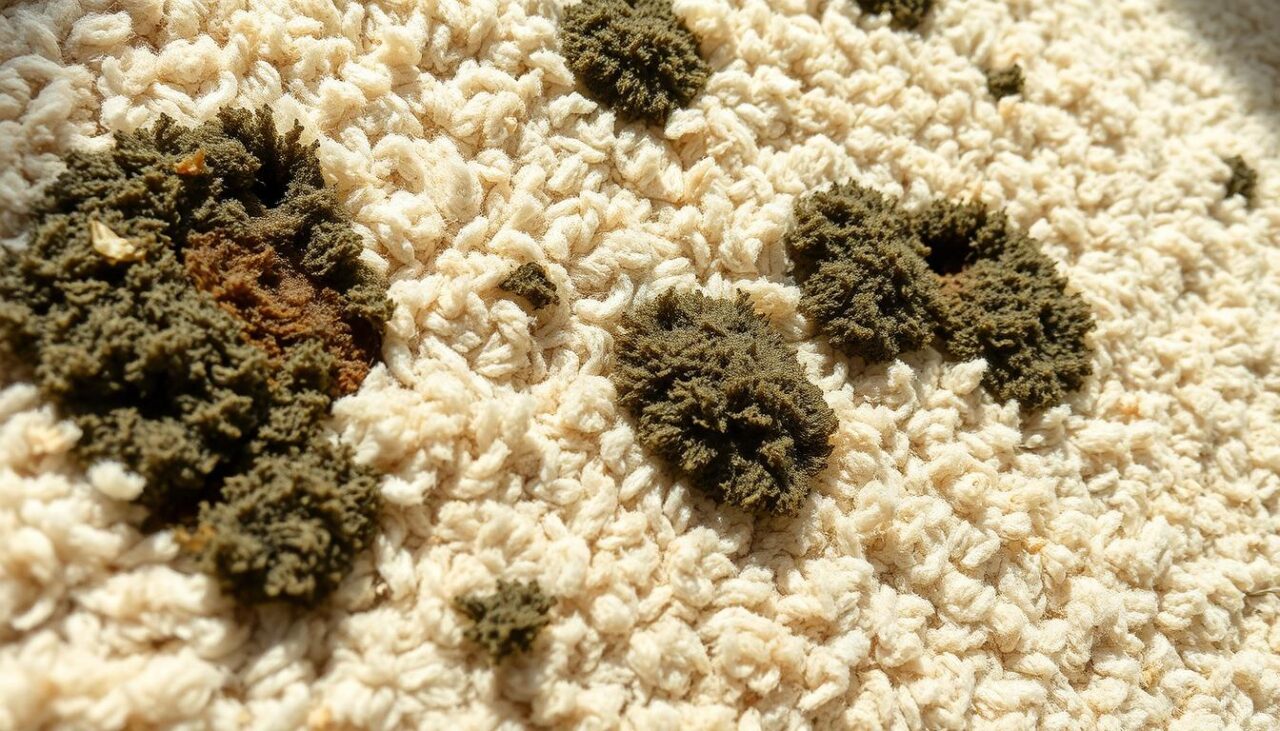
The most obvious signs of mold appear as dark patches or spots on your carpet surface. You might notice green, black, or white fuzzy growth that spreads across the fibers. Mold stains often show up as circular patterns that get darker at the center.
Check areas near walls, under furniture, and in corners where moisture tends to collect.
Color changes in your carpet can signal mold under carpet padding. Look for:
- Yellow or brown discoloration
- Dark spots that weren’t there before
- Patches that look different from the rest of the carpet
Detecting Musty Smells and Odors
A musty smell often appears before you see visible mold. This earthy, damp odor gets stronger in humid conditions or when the carpet stays wet. The smell might disappear when you air out the room but returns quickly.
If you notice persistent odors after cleaning, mold in your carpet has likely penetrated deep into the padding.
Recognizing Moisture Problems and Water Damage
Wet carpet creates perfect conditions for mold growth. Feel your carpet regularly, specially after spills or leaks. Signs of moisture problems include carpets that stay damp for more than 24 hours, lifted edges, or areas that feel spongy when you walk on them.
Water damage from flooding or pipe leaks requires immediate action. This is to prevent mold in your home from spreading.
Essential Tools and Safety Equipment To Get Mold Out of Carpet
Before you start removing mold from your carpet, it’s important to have the right tools. This ensures your safety and success. Getting ready properly makes the process safer and more effective.
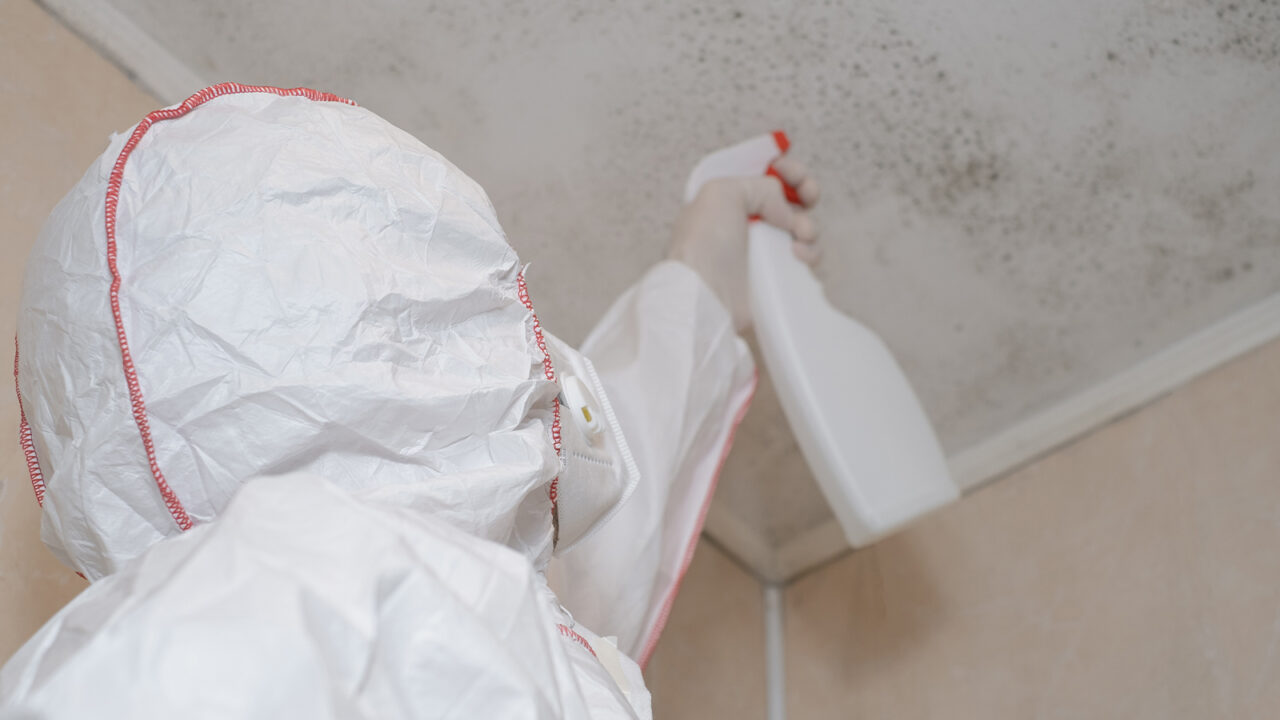
First, protect yourself. You’ll need a HEPA-filtered respirator or N95 mask to avoid breathing in mold spores. Don’t use regular dust masks for mold. Wear rubber gloves to protect your skin and safety goggles to keep your eyes safe from spores.
- Stiff-bristled brush (dry) for scrubbing
- Dustpan and heavy-duty trash bags
- EPA-approved mold remover spray
- Clean, disposable rags or paper towels
- Dehumidifier to control moisture
- Wet/dry vacuum (optional but helpful)
When choosing a mold cleaning product, look for ones approved for carpet use. These products kill mold and prevent it from coming back.
Plan to spend $245 to $2,500 on supplies and equipment. The cost varies based on the area you need to clean. Small spots might take 3 hours, while big areas could take 3 days. Being prepared saves time and ensures you can remove mold spores well without going back to the store.
Natural Methods to Remove Mold From Carpet
Discovering mold on your carpet can be a challenge. Luckily, natural cleaning solutions are safe and effective. They use common household items that fight mold without harming your carpet or family. Knowing which natural methods work best is key to removing mold.
Using White Vinegar for Mold Treatment
White vinegar is a great cleaner because it’s mildly acidic. For tough mold, use undiluted vinegar in a spray bottle. For everyday use, mix equal parts vinegar and water. Spray the moldy area well and let it sit for 20 minutes.
Use a soft brush to gently scrub the spot. Then, blot it with clean towels to dry. The smell will go away in a few hours.
Baking Soda Application Techniques
Baking soda breaks down organic materials and stops mold from coming back. Start by vacuuming the moldy area well. Then, sprinkle baking soda over the spots and let it sit for 20 minutes.
Scrub with a stiff brush and vacuum again. For tough mold, make a paste with baking soda and water. This method is even stronger when used with vinegar.
Salt and Clove Oil Solutions
Non-iodized salt dries out mold spores. Mix a strong salt solution and apply it to the moldy spots. Place the carpet in sunlight until a crusty layer forms. Then, vacuum it up.
Clove oil kills spores with its antiseptic properties. Mix 1/4 teaspoon of clove oil with a liter of water. Apply it sparingly and scrub until the mold comes off the fibers.
Professional-Grade Mold Removal Techniques
When natural remedies can’t handle stubborn mold in your carpet or rug, it’s time for professional help. These advanced methods clean deeper and remove mold more effectively than home treatments. Knowing when and how to use these techniques can protect your carpet fibers from damage.
Commercial Mold Removal Products
Professional mold removal products work faster and better than homemade solutions. Mold and Mildew Stain Remover Sprays can remove tough stains in just 15 seconds. The Chemical Guys cleaning kit has special solution, spray bottles, and drill brushes for deep carpet cleaning.
Mold Armor Mold Blocker Spray creates a protective barrier that lasts up to two months. It also has antibacterial properties.
Steam Cleaning Methods
Steam clean technology goes deep into carpet pad layers where mold hides. It kills mold spores and removes moisture that feeds growth. Professional equipment heats above 200°F, ensuring mold is fully removed from carpet fibers.
Companies like Steam Commander in Houston specialize in this service.
When to Call Professional Carpet Cleaning Services
You should contact professional carpet cleaning services when:
- Mold covers areas wider than 5 feet
- Growth has penetrated deep into the carpet pad
- Strong odors persist after DIY treatments
- Water damage exists beneath the carpet
- Your carpet hasn’t dried within 48-60 hours
- Family members experience health issues
- Mold returns despite repeated treatments
Steam Commander offers specialized mold remediation services. Sometimes, you’ll need to lift the carpet to assess damage underneath. If the backing shows substantial growth, you may need to replace the carpet entirely.
For partial damage, professionals can cut out the affected area. They do this with a 12-inch border beyond the visible damage.
Preventing Future Mold Growth in Carpets
To keep your carpets mold-free, you need to work hard and use smart strategies. Moisture is the main cause of mold, so controlling humidity is key. Use a good dehumidifier in damp areas to stop mold.
Try to keep humidity inside your home under 50%. This makes your carpet dry and not welcoming to mold spores.
Your daily actions are important in stopping mold. Don’t put plants on carpets. Use waterproof trays with rubber mats to stop moisture.
Choose glazed ceramic pots over terra-cotta ones to avoid mold. If you have pets, clean up accidents fast. Use sprays to stop pets from making messes again.
Regular care is vital to stop mold from coming back:
- Vacuum carpets weekly to remove dust and organic matter that feeds mold
- Fix water leaks within 24 hours to avoid conditions that grow on carpet fibers
- Ensure proper ventilation by opening windows on dry days
- Use antimicrobial sprays monthly on high-traffic areas
- Check under furniture and along baseboards for hidden moisture
After spills or water damage, let carpets dry for at least 24 hours. Use fans and dehumidifiers to dry faster, but don’t spread spores. Watch areas that had mold for weeks to catch any new growth.
Conclusion – Removing Mold From Your Carpet
Dealing with mold in your carpet is urgent to keep your health and home safe. Quick action is key to avoid bigger issues. Your carpet might show damage that needs fast attention.
Natural solutions can help stop mold from spreading, but professional products are often better for removal. It’s important to treat mold and fix the cause. Your carpet and padding need the right care.
Use the right tools, ventilate, and let everything dry completely. A dehumidifier speeds up drying and lowers mold risk. Clean tools with hot water and anti-fungal products after each use.
To avoid mold, watch for water leaks and moisture in your home. Regularly check treated areas for mold return. If mold keeps coming back, call experts like Steam Commander.
Proper mold care now saves money and health problems later. It’s a smart move for your home’s future.
FAQ – Carpet Mold Removal
How quickly can mold grow on wet carpet?
Mold can start growing on your carpet in 24-48 hours after it gets wet. The mold spores spread fast, thanks to air conditioning or fans. It’s key to dry wet carpet quickly to stop mold.
What does carpet mold look like?
Mold on carpet looks like green, gray, or white patches. It can also cause discoloration. Black mold is dark, while green patches are from Aspergillus or Penicillium. Sometimes, mold hides under the carpet edges.
Can I use bleach to kill mold in carpet?
Bleach can eliminate mold but it’s not good for carpets. It can discolor and damage the fibers. Instead, use white vinegar, baking soda, or EPA-approved sprays. These are safer and won’t harm your carpet.
When should I replace moldy carpet instead of cleaning it?
Replace the carpet if mold covers more than 5 feet, is deep in the backing or pad, or keeps coming back. Also, if it was soaked with Category 3 water, like sewer backup, it must be replaced for safety.
What health problems can mold in carpet cause?
Mold in carpet can cause asthma, allergies, bronchitis, and breathing issues. It can also lead to skin rashes, eye problems, sneezing, headaches, and fatigue. Some people are more sensitive and can face serious health issues like heart disease or liver damage.
How do I prevent mold from growing back after removal?
Keep your carpet dry with dehumidifiers and fix leaks fast. Ensure good air flow and clean spills quickly. Use mold prevention sprays like Mold Armor for up to two months. Avoid placing potted plants on carpet and use moisture barriers under items that might trap water.
Can I remove carpet mold myself or do I need professionals?
You can tackle small mold problems yourself with safety gear. But, call professionals for big infestations or health issues. Services like Steam Commander are good choices.
What’s the best natural mold remover for carpets?
White vinegar is a top natural mold remover. Mix it with water for cleaning or use undiluted for tough spots. Baking soda is also effective – sprinkle, let sit, scrub, and vacuum. Mixing both creates a strong solution.