If you’ve gotten a quote that says “steam cleaning” and something felt a little vague, you’re not wrong to wonder about it. Most homeowners think hot water extraction and steam cleaning are just two names for the same visit. That’s a fair guess, since plenty of companies use the terms as if they mean the same thing. But they’re really different processes. And the difference decides whether your pet stains and odors actually leave your carpet, or just get covered up for a few weeks. That’s exactly what the professional carpet cleaning method at Steam Commander is built around.
Maybe you booked a steam cleaning appointment in Cypress. Maybe you’re wondering if the crew actually did what you paid for. That’s worth asking before the invoice, not after. Most homeowners assume steam cleaning and hot water extraction are the same. They’re not. And the gap matters most in homes with pets. Buried urine crystals and odor-causing bacteria need real heat, real pressure, and real suction to leave for good. This article breaks down what each method does, what the industry’s own standard actually says, and how to check that the cleaning you book matches the words on your invoice.
Key Takeaways
- Hot water extraction (HWE) and steam cleaning are different processes. HWE uses pressurized hot water and suction. True steam cleaning uses low-moisture vapor instead.
- Most companies that advertise steam cleaning are really doing hot water extraction. The IICRC treats this as the standard deep-cleaning method for carpet.
- HWE puts water and cleaning solution into carpet at 150-230°F. Then it pulls about 95% of that moisture back out. Vapor steam applies almost no moisture at all.
- For pet owners, HWE reaches urine crystals and bacteria trapped deep in carpet fibers and padding. A low-moisture vapor cleaner can’t do this alone.
- Cypress humidity often runs between 75 and 90 percent. Leftover moisture from an incomplete extraction can cause mold risk within 24 to 48 hours if no one checks that the carpet is dry.
What Is Hot Water Extraction? (Truck-Mounted vs. Portable Extraction)
Hot water extraction is the deep cleaning process most professional carpet cleaners actually use. This is true even when their trucks say something else on the side.
The Hot Water Extraction Process Step by Step
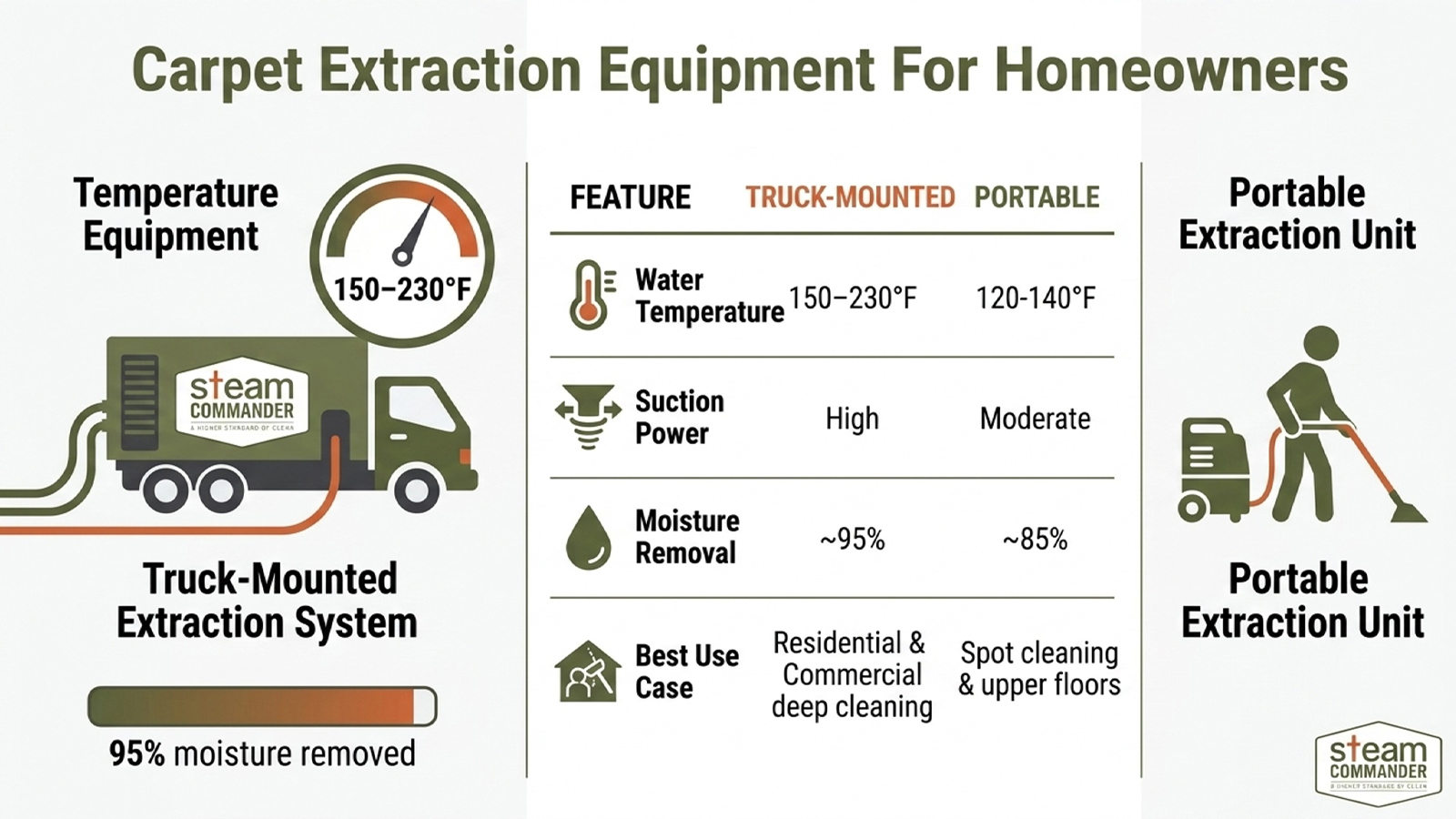
A pH-balanced carpet cleaning solution mixes with hot water. That mix gets pushed right into carpet fibers at 150 to 230°F. Agitation loosens soil and dirt that regular vacuuming never touches. Then a powerful vacuum pulls the solution back out, taking loosened soil and leftover soap with it. About 95% of the moisture leaves in one pass. Heat, pressure, and suction work together to break down grease, bacteria, and old stains hiding in the padding underneath. This is what gives hot water extraction its edge over surface-level cleaning. As an extraction method, it does two jobs at once. It loosens what’s buried, and it physically pulls it out, instead of just applying heat and moving on. The right detergent also matters here. A pH-balanced formula lifts soil without leaving behind a sticky residue that attracts dirt faster once the carpet dries.
Truck-Mounted Extraction System vs. Portable Extraction Unit
Not every hot water extraction setup works the same way. A truck-mounted extraction system runs off a unit parked outside, with a hose reaching into the home. It usually makes more heat and stronger suction than smaller machines. A portable extraction unit is compact and easy to move. This makes it a good fit for apartments, high-rises, or spaces a hose can’t reach. Cypress homes tend to be larger, with several carpeted living areas. So a truck-mounted system is usually the better choice for whole-home jobs. A moisture meter should confirm the extraction reached deep enough. That detail matters later, when we look at what happens if moisture gets left behind.
Why Most “Steam Cleaning” Companies Actually Mean Hot Water Extraction
What True Vapor Steam Cleaning Actually Does
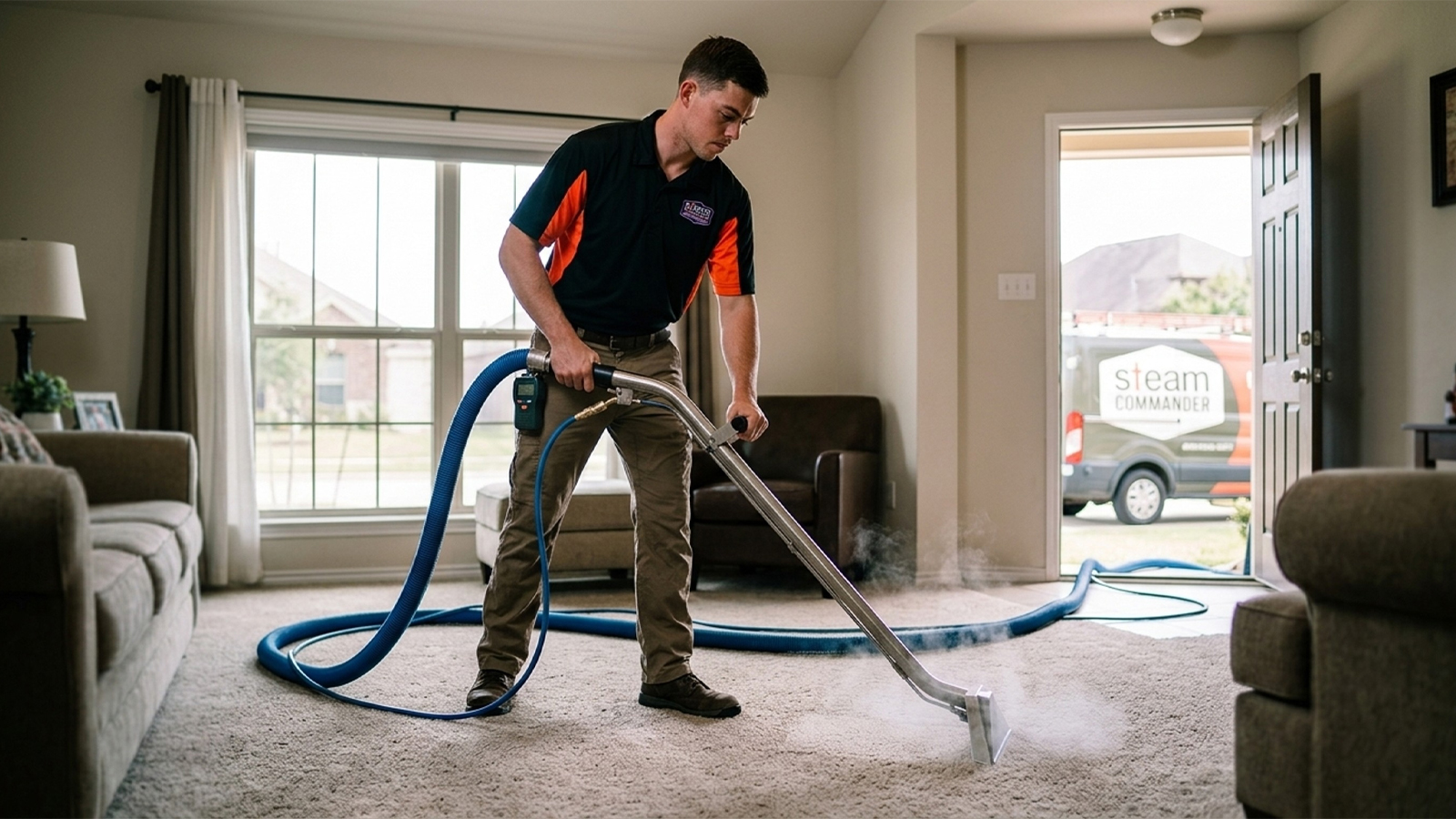
A true vapor steam cleaner makes very little moisture but runs on high heat. It’s mainly used to sanitize hard, sealed surfaces like tile, grout, and countertops. It’s rarely used alone on carpet, because it doesn’t rinse soil out, and it doesn’t pull water back out either. This gap between what steam cleaning and hot water extraction actually do explains why the two terms get mixed up so often. Knowing the difference up front sets the right expectations before a crew ever touches your carpet.
The IICRC S100 Standard, Explained
The Institute of Inspection, Cleaning and Restoration Certification (IICRC) publishes the S100 standard. It sets performance goals for professional carpet cleaning, rather than requiring one exact method. Most companies that list steam cleaning and hot water extraction on the same invoice are actually following S100 guidance while running a hot water extraction machine. The term “steam cleaning” stuck decades ago as a catch-all phrase. But the equipment behind it is a hot water extraction unit, not a handheld vapor steamer. That’s the overlap that shows up in almost every homeowner’s search results. Yet the two are truly different approaches with truly different results. Understanding steam cleaning vs. hot water extraction before you book is the easiest way to avoid paying for one process while expecting another.
Hot Water Extraction vs. Steam Cleaning at a Glance
| Method | Temperature | Moisture Level | Drying Time | Pet Stain, Odor, Allergen, and Bacteria Effectiveness | Equipment Used |
|---|---|---|---|---|---|
| Hot Water Extraction | 150-230°F | High, then extracted back to about 95% | 6-12 hours | High, reaches deep-set urine crystals and bacteria in fibers and padding | Truck-mounted extraction system or portable extraction unit |
| Vapor Steam Cleaning | 200-300°F, very low moisture | Very low | Under 1 hour | Low to moderate on carpet, better suited for hard surfaces and upholstery seams | Vapor steam cleaner |
| Encapsulation / Low-Moisture Cleaning | Ambient to warm | Minimal | 1-2 hours | Moderate, good for light maintenance, not for deep-set pet soil | Encapsulation cleaning equipment |
Before you book, ask a few direct questions. Each carpet cleaning method gives different results. Comparing cleaning vs. hot water extraction options side by side is the fastest way to see where the differences really matter. These questions tell you exactly what you’re paying for:
- Ask whether the quote means a truck-mounted extraction system or a portable extraction unit.
- Ask if the cleaning solution is pH-balanced and safe for pets and carpet fibers.
- Ask whether the company follows the IICRC S100 standard.
- Ask if moisture meter readings are taken and written down after the job.
- Ask for an expected drying time in writing before you book.
We ran into this exact situation with a Cypress family in Bridgeland. Their old cleaner had advertised steam cleaning but left a lingering urine smell near the baseboards. We explained the steam cleaning vs hot water extraction difference, and how low-moisture vapor simply can’t reach what’s buried in padding. After that, they booked a full hot water extraction service with documented moisture readings. The odor never came back, and their carpet stayed cleaner far longer than it had with the old service. If you’re dealing with something similar, it’s a fair question to bring up with any company you’re considering, including us.
Which Method Is Better for Pet Owners?
Why Urine Crystals Need More Than Surface Cleaning
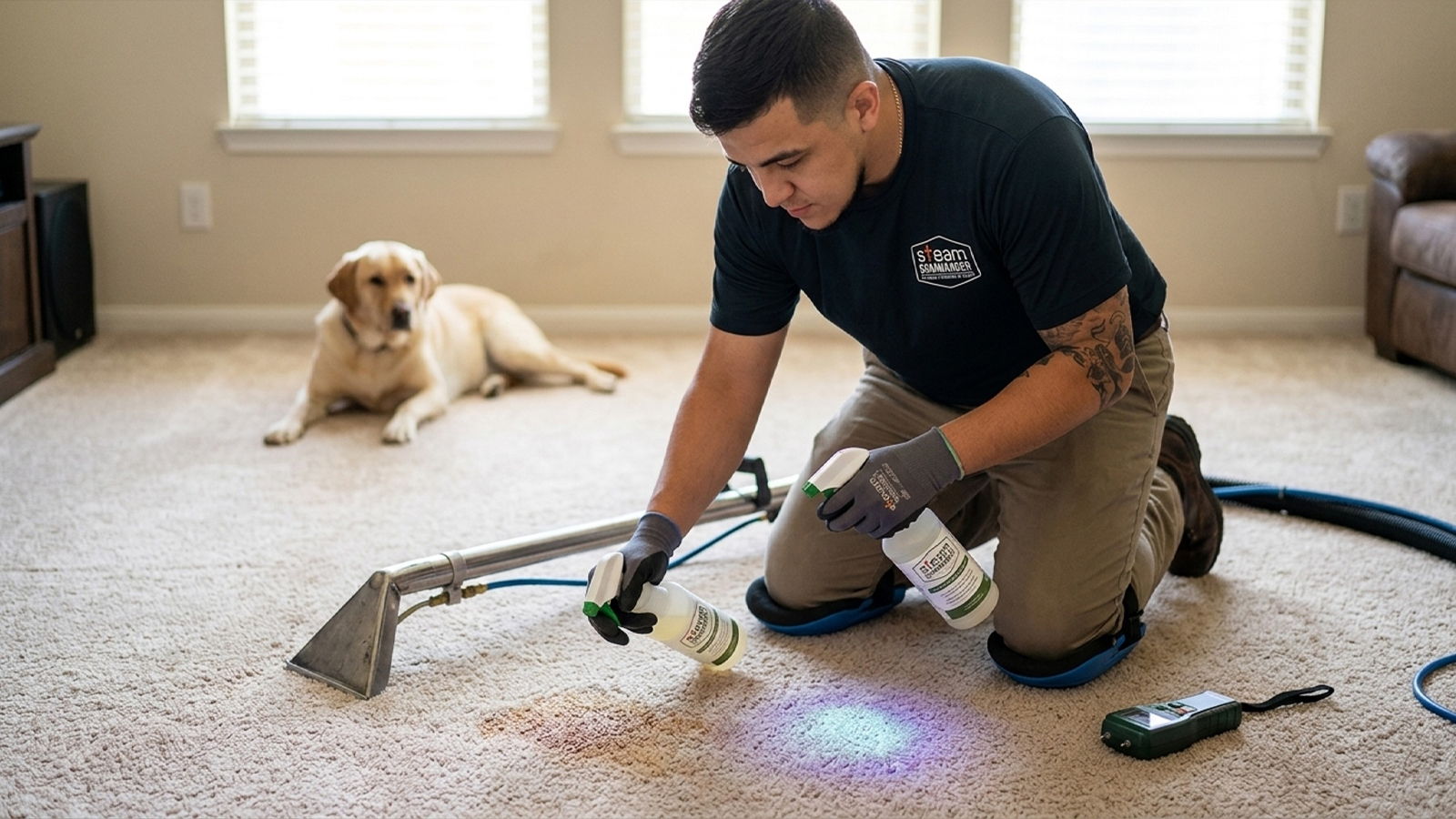
Pet urine doesn’t just sit on top of carpet fibers. It soaks down into the backing and padding, where it dries into crystals. These crystals bring back odor every time humidity rises. Vapor steam can freshen the surface, but it has no way to pull those crystals out. Hot water extraction floods the affected area with pressurized solution, breaks the crystals down, and vacuums them out along with the moisture. That’s the only way to actually remove the source of the smell instead of just covering it up. It’s the difference between a carpet that looks fresh for a week and a truly clean carpet that stays that way.
Why Enzyme Pre-Treatment Matters
For set-in pet stains, most technicians apply an enzyme-based pre-treatment before running hot water extraction. The enzymes break down the proteins in urine and other waste. This makes the stain and odor easier to lift during extraction. Skipping this step on an old stain usually means the smell comes back within a few weeks, even after a thorough cleaning.
Why Allergens Need Extraction, Not Just Heat
Pet dander and dust mite waste sit deep in carpet pile, and heat alone doesn’t remove them. Vapor steam kills some organisms on contact but leaves the dead material behind. Hot water extraction combines heat with suction, so allergens get lifted out along with the wastewater instead of staying trapped in the fibers. These are truly different cleaning goals: sanitizing a surface versus physically removing what’s stuck in it. Pet owners need the second one far more often than they realize.
Learn More: Pet Odor and Stain Removal Services
What Happens If Excess Moisture Is Left Behind
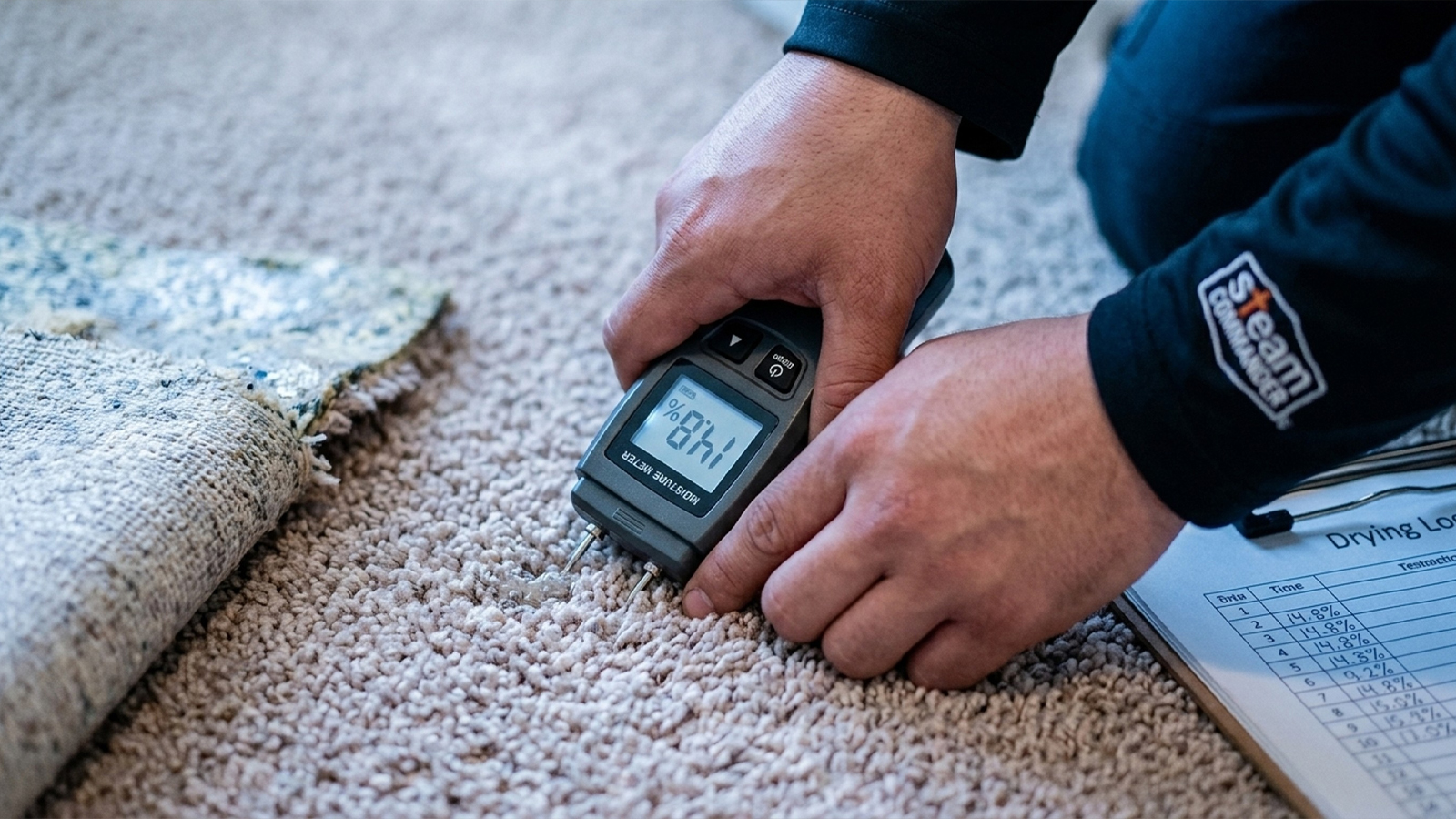
Hot water extraction only works when the water that goes in comes back out. If a technician rushes the extraction pass, or if the equipment isn’t strong enough to pull moisture from deep padding, water stays trapped under the carpet. In Cypress, where humidity typically runs between 75 and 90 percent, that trapped moisture doesn’t dry on its own. It sits there and creates the conditions mold needs to grow, often within 24 to 48 hours.
This is why a moisture meter check isn’t an extra step you can skip. It’s proof the job was actually finished. A reading taken right after extraction, and again once the carpet feels dry to the touch, confirms the padding underneath is dry too, not just the surface fibers. If your home has had a recent leak or flooding on top of a carpet cleaning need, this same moisture-checking process is central to proper water damage restoration in Cypress and to mold prevention after a water leak. If that sounds like your situation, it’s worth reading up on before you decide who to call.
Learn More: How to Prevent Mold After a Water Leak
How to Ask the Right Questions Before You Book
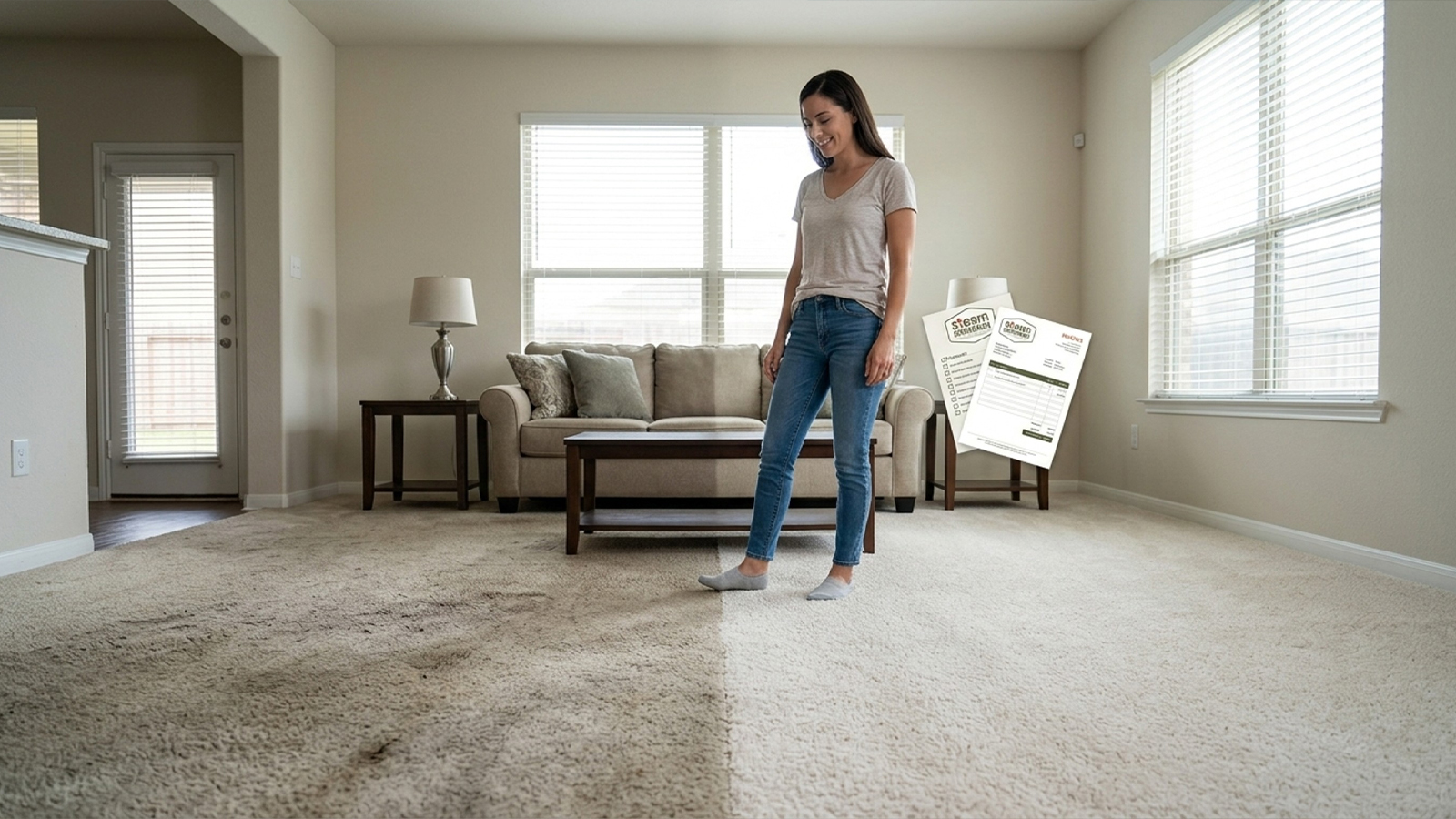
A few minutes of questions before you book can save you from paying for the wrong process. Here’s what to ask any carpet cleaning company before they show up:
- What equipment will you use: a truck-mounted extraction system or a portable extraction unit?
- Is your cleaning solution pH-balanced and safe for pets?
- Do you follow the IICRC S100 standard for carpet cleaning?
- Will you take moisture meter readings before and after the job?
- What’s the expected drying time, and will you put it in writing?
- Do you offer enzyme pre-treatment for pet stains and odors?
- Does your cleaning method meet the requirements for CRI Seal of Approval products, in case my carpet warranty depends on it?
A company that answers these clearly and directly knows the difference between marketing language and the actual process. A company that gets vague or defensive is worth a second look elsewhere. If it helps to have a second opinion while you’re comparing quotes, feel free to call us at (832) 813-2175 and ask us the same list. We’d rather you go in informed than guess.
Conclusion
Hot water extraction, not low-moisture vapor steam, is the method that actually fixes pet stains, odor, and allergens buried in carpet and padding. A job isn’t done until moisture meter readings confirm the carpet and padding have dried all the way through. That step matters even more in Cypress, since local humidity can turn leftover moisture into a mold problem fast.
None of this means you need to become an expert before your next cleaning. It just means it’s fair to ask what method a company is actually using, and to expect a straight answer. If pet odor keeps coming back, or you’re dealing with a recent water issue, our pet odor removal, mold prevention, and water damage restoration resources go into more detail on each.
When you’re ready, our carpet cleaning service page walks through the equipment, temperature, and drying plan we use on every Cypress job. That way, you know what to expect before we show up.
FAQ
Is hot water extraction the same as steam cleaning?
No. Hot water extraction and steam cleaning are two different processes, not just different names for the same service. Hot water extraction pushes heated water and cleaning solution into carpet fibers, then vacuums nearly all of it back out. True steam cleaning uses a low-moisture vapor made mainly for hard surfaces. When comparing quotes, ask which equipment the company actually uses so you know what you’re paying for.
Is hot water extraction better than steam cleaning for pet odors?
Yes. Hot water extraction works better than steam cleaning for pet odors because it reaches urine crystals and bacteria buried deep in carpet fibers and padding. Low-moisture vapor cleans surfaces, but it doesn’t rinse or pull anything out. So it can’t remove buried pet soil the way hot water extraction can. Pairing an enzyme pre-treatment with hot water extraction gives the best results for older, set-in pet odors.
What temperature does hot water extraction use?
Hot water extraction usually uses water heated to between 150 and 230°F. This range breaks down grease, soil, and bacteria better than lukewarm water or a rental machine that can’t get as hot. Professional truck-mounted systems keep these temperatures steady through the whole job.
Does steam cleaning kill fleas and bacteria in carpet?
Vapor steam can kill some organisms on contact, thanks to its high surface heat. But it doesn’t physically pull dead matter or eggs out of carpet fibers. Hot water extraction handles both jobs at once. It kills bacteria with heat, then pulls the debris out of the carpet. That’s why hot water extraction is usually the better choice for homes with pets.
How long does carpet take to dry after hot water extraction?
Carpet usually takes 6 to 12 hours to dry after hot water extraction. This depends on airflow, humidity, and how thick the carpet is. In Cypress, where humidity often sits between 75 and 90 percent, good airflow and a moisture meter check help confirm the carpet is truly dry, not just dry on the surface. Skipping that check raises the risk of mold within 24 to 48 hours.
Is steam cleaning safe for pets to walk on right away?
Low-moisture vapor steam dries fast, so pets can usually walk on treated hard surfaces soon after cleaning. But after hot water extraction on carpet, pets and kids should stay off the area until it’s confirmed dry. Damp carpet can pick up soil or bacteria on paws and feet. A written drying-time estimate from your provider removes the guesswork.
What is the truck-mounted method vs. portable steam cleaner?
A truck-mounted extraction system gives stronger suction and higher, steadier heat, since it runs off equipment in the vehicle instead of a small indoor unit. A portable extraction unit is smaller and easier to move. It’s often used in apartments or buildings a hose can’t reach from outside. For most full-size Cypress homes, truck-mounted systems clean faster and dry quicker because of their stronger extraction power.
What’s the difference between steam cleaning and hot water extraction for carpet warranty purposes?
Most carpet makers require documented hot water extraction, not steam cleaning, to keep a carpet’s warranty valid. This documentation usually includes proof of the cleaning method, water temperature, and technician certification. Booking with a provider who can give you that paperwork protects your warranty and gives you a record if you ever need to file a claim.