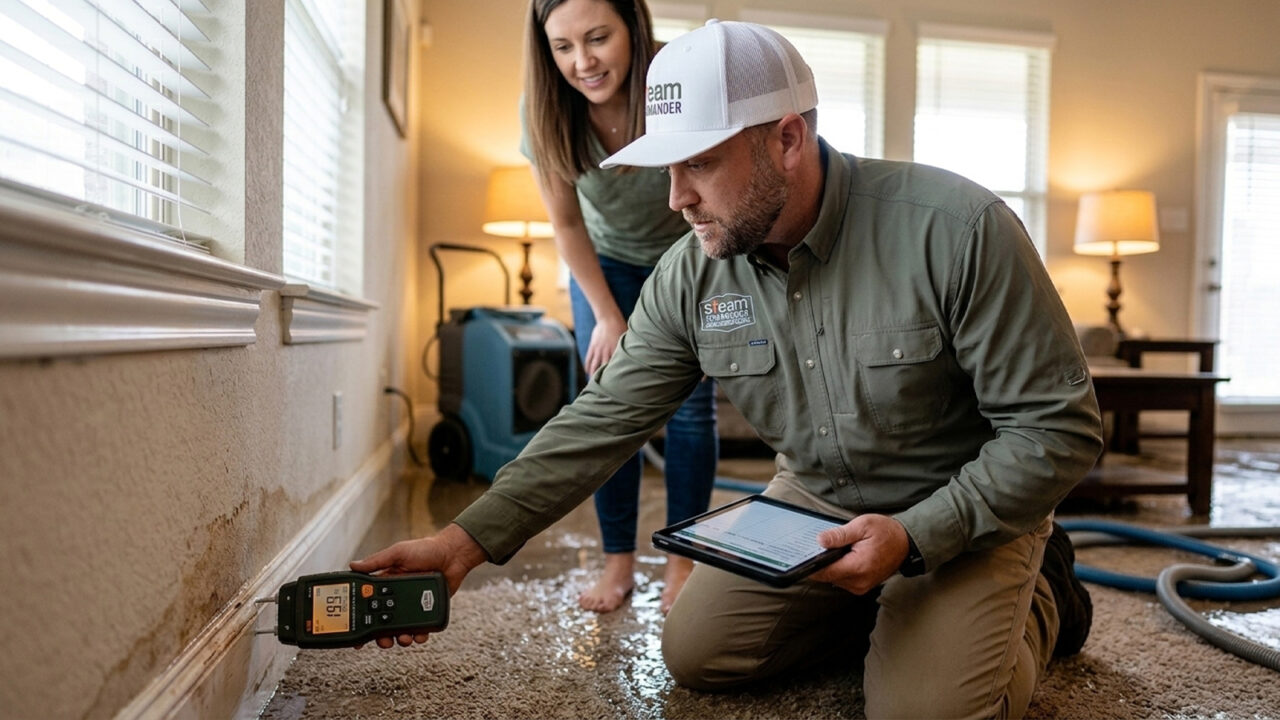
Maybe it’s a pipe that burst under your slab foundation overnight, storm runoff that found its way through a foundation crack, or a washing machine hose that gave out while you were asleep. Whatever brought you here, you’re standing in it right now, phone in hand, trying to sort out water mitigation vs. water damage restoration vs. water remediation before you know who to call. Here’s what matters more than getting the terminology exactly right: getting a licensed team on-site now is what actually protects your home and your claim. Our water damage restoration team can be there fast, sorting out exactly what your home needs and starting the documentation your insurance adjuster will actually accept.
This article explains what each term actually means, why guessing wrong (or going the DIY route) puts your home and your claim at risk, and what to do next.
Key Takeaways
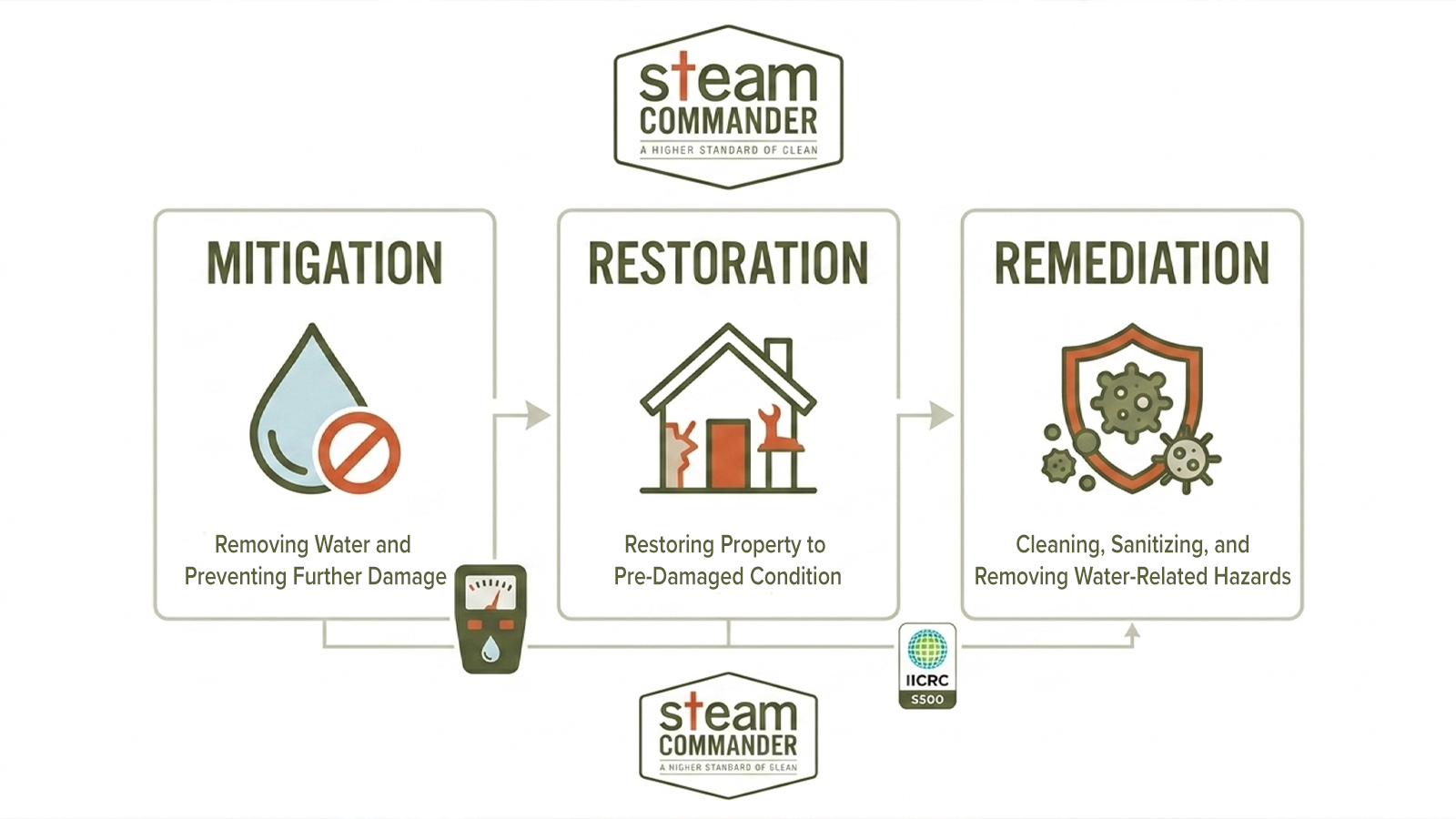
- Water mitigation stops the water and prevents further damage. Water damage restoration repairs and rebuilds what was lost, working to restore your home to its pre-loss condition. Water remediation addresses contamination like mold or sewage.
- Houston’s humidity regularly sits between 75 and 90 percent, which means mold growth can begin within 24 to 48 hours of water contact, not as a worst case, but as a baseline. That’s also why mold remediation sometimes becomes part of the scope when standing water isn’t extracted fast enough.
- Insurance adjusters require calibrated, timestamped moisture readings and a documented drying protocol. Without them, claims get delayed, reduced, or denied.
- A licensed, IICRC-certified team determines whether your home needs mitigation, restoration, or remediation in the first hour on-site. You don’t have to figure that out alone.
- Steam Commander offers a 60-minute emergency response guarantee to begin the assessment and documentation process immediately.
Water Mitigation vs. Restoration vs. Remediation: Key Differences Explained
The industry standard here is IICRC S500, the water damage restoration standard licensed technicians are trained and certified against. It breaks recovery into phases. Understanding those phases is the fastest way to understand what your home actually needs, and it’s usually the first thing a homeowner wants clarity on before deciding what to do next.
What Water Mitigation Actually Stops
Water mitigation is the first response. Shut off the water source. Extract standing water with professional equipment. Take immediate steps to keep damage from spreading into walls, subfloor, and belongings. Mitigation stops the bleeding, it doesn’t fix what’s already broken. If your Cypress home sits on a slab foundation with carpeted living areas, this is the phase where water pools invisibly under baseboards and migrates before you’d ever notice from across the room. Thorough water removal at this stage, not just from the surface but from padding and subfloor, is what determines whether the job stays a simple mitigation or escalates into something bigger.
Where Water Damage Restoration Picks Up
Once mitigation stops the water and the affected area is confirmed dry, restoration begins. This is the repair phase: drying out remaining moisture, repairing damaged drywall and flooring, and working to restore the structure to its pre-loss condition. Restoration puts your home back together. It doesn’t just protect it from getting worse. A licensed team finishes the job instead of leaving repairs half-done, and a well-run restoration process moves in a clear sequence, from drying verification to rebuild, so nothing gets closed up before it’s confirmed safe.
When Water Remediation Becomes Necessary
Remediation deals with contamination that mitigation alone can’t resolve. Mold, most often. Sometimes bacteria or sewage backup. If water sat too long before extraction, or came from a contaminated source like a sewer line, remediation becomes its own scope of work. Mold remediation specifically may be required once growth has already started. In practice, these three phases overlap constantly, and one licensed team typically handles the whole process under a single documented plan, guiding the work from first inspection to final repair. That overlap is exactly why the terminology confuses so many homeowners, and it’s also why the fastest path forward is usually a single call rather than three separate ones.
Why Guessing Wrong (or Going DIY) Puts Your Cypress Home and Claim at Risk
Why Wet-Vacs and Fans Miss Hidden Moisture
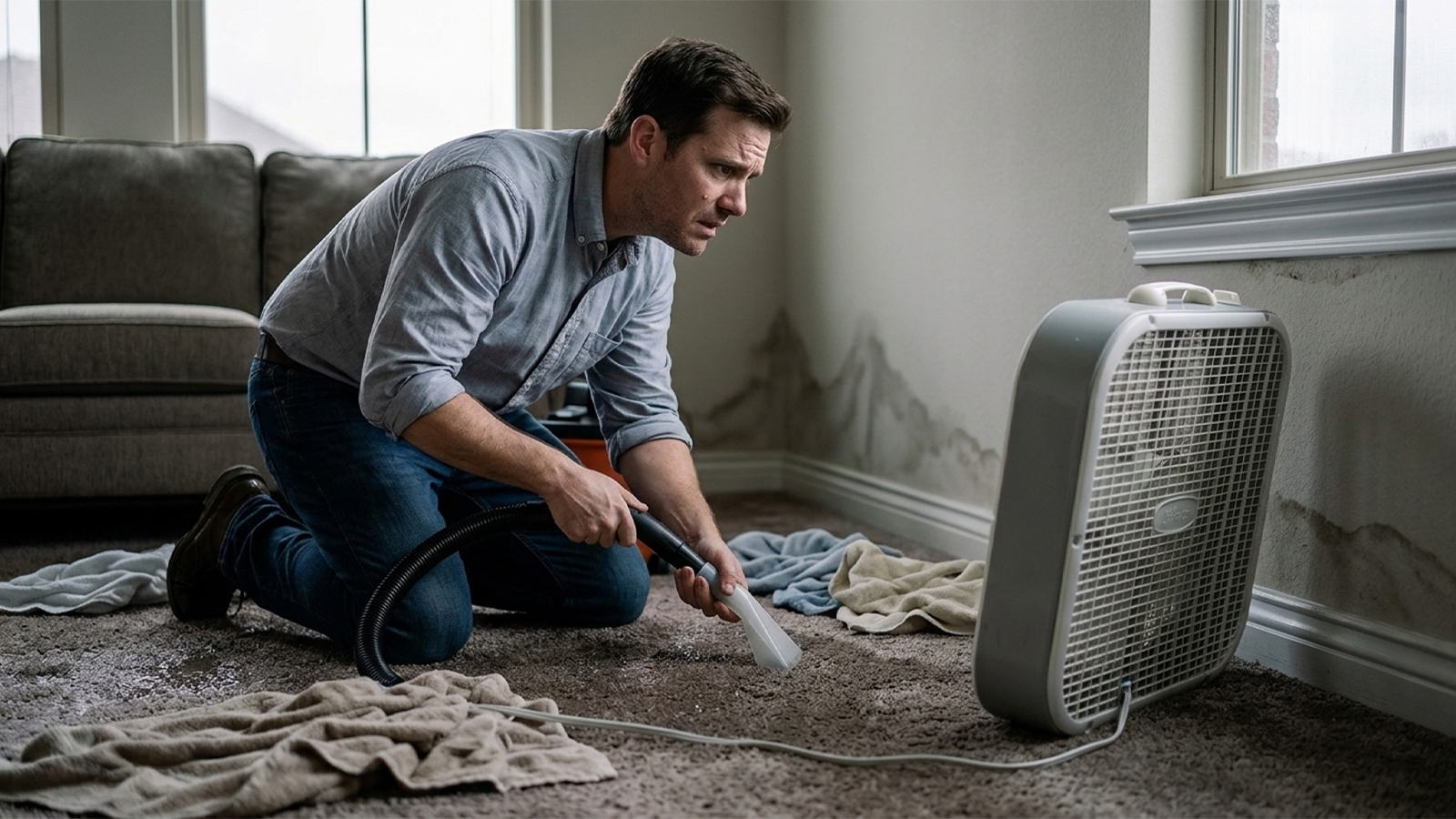
A rented wet-vac and a couple of box fans will dry visible surfaces. That’s it. They do nothing for moisture trapped inside wall cavities, subfloor, and insulation, which happens to be exactly where mold needs to take hold. A damp carpet or a discolored ceiling often signals a much larger extent of damage underneath, the kind only professional water extraction equipment and moisture meters are built to find. If you’re standing over a wet spot right now wondering whether this is a rent-a-fan situation or something bigger, that uncertainty itself is usually the answer.
The Unlicensed Contractor Risk After Houston Storms
After major storm events, Cypress and the surrounding Houston area see a wave of out-of-state, unlicensed “storm chaser” companies offering fast, cheap flood cleanup. Homeowners are better served vetting licensed, local restoration companies before letting anyone start tearing out materials. Many of these outfits skip documentation entirely, closing walls over framing that was never confirmed dry. Homeowners often discover mold problems 12 to 18 months later, long after the insurance file has closed. Cypress Creek has a documented history of overflow during major storms, and older housing stock built in the 1980s and 90s is especially vulnerable to hidden water intrusion behind walls that was never professionally addressed the first time.
The Cost of Paying Twice
One of our technicians was called out to a Cypress home where the homeowner had rented equipment and dried the visible carpet after a slab leak. Three weeks later, the homeowner found soft, discolored drywall behind the baseboards. What started as a same-day mitigation job turned into a full remediation and drywall repair, because standing water had wicked into the wall cavity undetected. Misdiagnosing a mitigation job as simple cleanup often means paying for the DIY attempt, then paying again for a licensed team to restore the structure and remediate the mold growth that followed. In Houston’s humidity, the gap between “looks dry” and “measured dry” is where the real cost hides.
Conclusion: Call Before You Diagnose It Yourself
Water mitigation, water damage restoration, and water remediation are real, distinct categories. But figuring out which one applies to your home isn’t something you should be doing under pressure. Whatever you call your situation, the only thing that actually stops the mold clock and protects your insurance claim is a licensed, documented response that starts now, not after you’ve finished researching. Our teams determine on-site whether you need mitigation, a full mitigation-and-restoration combination, or remediation for contamination, and we start the drying process and moisture logging the same visit.
You’ve done the research. You already know more than most homeowners standing in this exact spot right now, and you know the smart move isn’t picking a term off a list, it’s letting a licensed technician make that call in person. If you’d rather talk it through than keep reading, dial (832) 813-2175 and our 60-minute emergency response guarantee puts a certified technician at your door, ready to tell you plainly what you’re dealing with and start your moisture certification on the spot. It’s a free diagnostic visit with no pressure beyond that first conversation, so the only thing left to decide is when you’re ready to make the call.
FAQ
What is the difference between water mitigation and water damage restoration?
Water mitigation is the action taken to stop water and prevent further damage, while water damage restoration is the repair and rebuild phase that follows. The two are usually handled by the same licensed team in sequence. Rather than trying to determine which phase your home is in, a professional assessment on-site removes the guesswork.
What is the difference between water mitigation and remediation?
Water mitigation focuses on removing water and drying the structure, while remediation focuses on treating contamination such as mold or sewage exposure. Remediation often becomes necessary only when mitigation is delayed or incomplete. A fast professional response is the best way to avoid needing remediation services at all.
Do I need water mitigation or restoration first after a pipe burst?
Mitigation always comes first because it stops the water and prevents additional damage before repairs can begin. Restoration follows once the structure is confirmed dry with calibrated moisture readings. A licensed technician makes this call on-site rather than leaving it to the homeowner to guess.
How much does water mitigation cost compared to water remediation?
Water mitigation costs are typically lower than remediation, since remediation involves treating contamination on top of drying and repair work. Exact costs vary based on scope, water source, and how long the affected area was wet. A free diagnostic visit gives you a real number instead of a guess.
Will my homeowners insurance cover water mitigation and restoration?
Most standard homeowners policies cover sudden, accidental water damage, such as a burst pipe, when it’s properly documented. Coverage depends on calibrated, timestamped moisture readings and a documented drying protocol from a licensed water mitigation service. Without that paperwork, adjusters routinely delay or reduce payouts.
How long does it take for mold to grow after water damage in Houston humidity?
Mold can begin growing within 24 to 48 hours of water contact in Houston’s typical 75 to 90 percent humidity range [1]. This isn’t a rare outcome. It’s the statistical baseline for this climate. Fast professional water extraction is the most reliable way to beat that window.
Can I do water mitigation myself with a wet-vac and fans?
A wet-vac and fans can help remove standing water from visible surfaces, but they can’t reach moisture trapped in subfloor, wall cavities, or insulation. Professional mitigation relies on calibrated moisture meters to find what you can’t see. Extracting standing water is only the first step; confirming hidden areas are dry is what actually protects your home.
What documentation does my insurance adjuster need after a water damage claim?
Insurance adjusters need calibrated, timestamped moisture readings and a written, documented drying protocol to fully process a claim. A licensed restoration team provides this as part of an adjuster-ready package. This is the documentation a homeowner cannot generate on their own with rented equipment.