
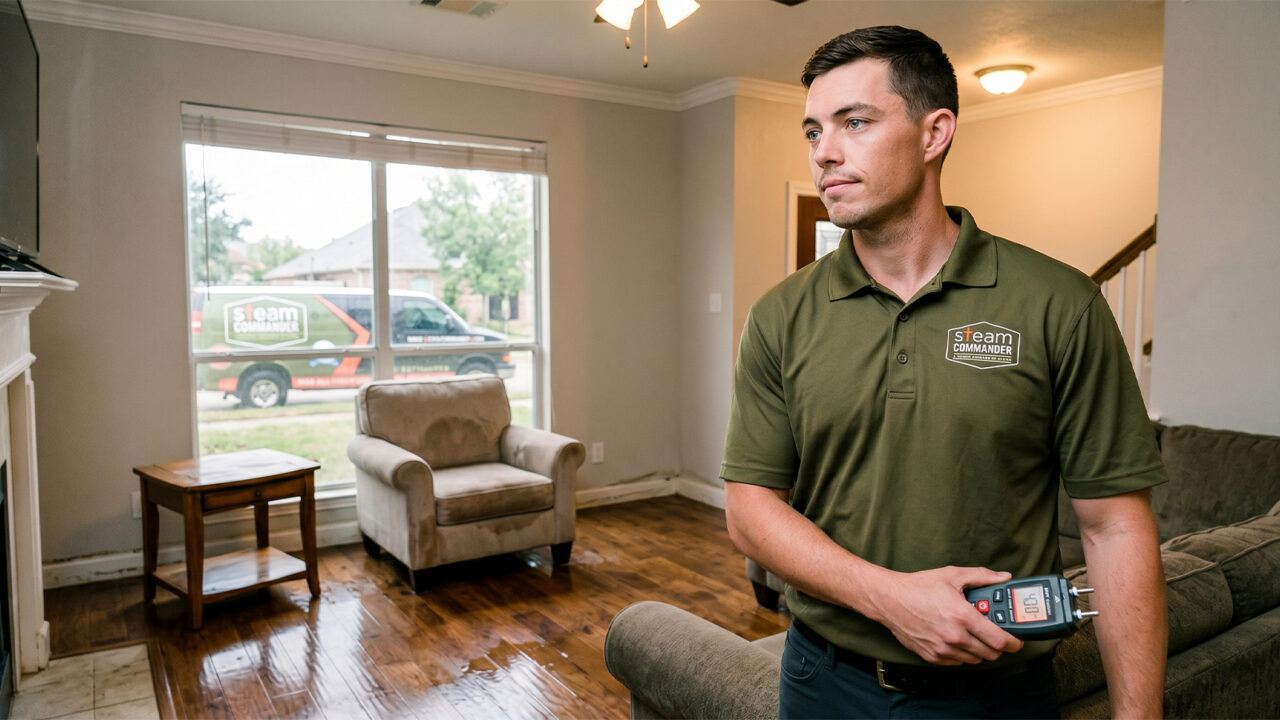
Water damage doesn’t give you time to think. Whether it’s a burst pipe, a storm pushing water under the door, or a flood that arrived faster than anyone expected, you’re standing in front of soaked furniture with a narrow window to save it — and the wrong first move can close that window permanently.
Before you reach for a fan or start wiping things down, read this.
The instincts most homeowners act on in the first hour are the same ones that turn salvageable pieces into write-offs. If you need immediate help, Steam Commander provides professional water damage restoration services throughout Cypress and Harris County.
Key Takeaways
- Mold can colonize wood and upholstery within 24 to 48 hours of saturation, often before any smell or visible sign appears
- Solid wood furniture is the most salvageable material; particle board, MDF, and heavily upholstered pieces face much steeper odds
- DIY drying with fans or direct heat frequently locks in warping and cracks that cannot be undone
- Cypress and Harris County’s summer humidity compresses the safe-response window — what takes 72 hours to become a mold problem in a drier climate can happen in under 36 hours here
- A professional moisture assessment in the first few hours is the single most protective action you can take, for your furniture and for your insurance claim
Assessing the Damage: What You’re Actually Working With
Not all water damage is equal. The source matters immediately. Clean water from a burst supply pipe is categorically different from gray water out of an overflowing appliance, which is different again from the black water that enters during a flood or sewage backup.
The further down that scale you go, the more contaminated every porous surface becomes, and the less viable any DIY approach gets.
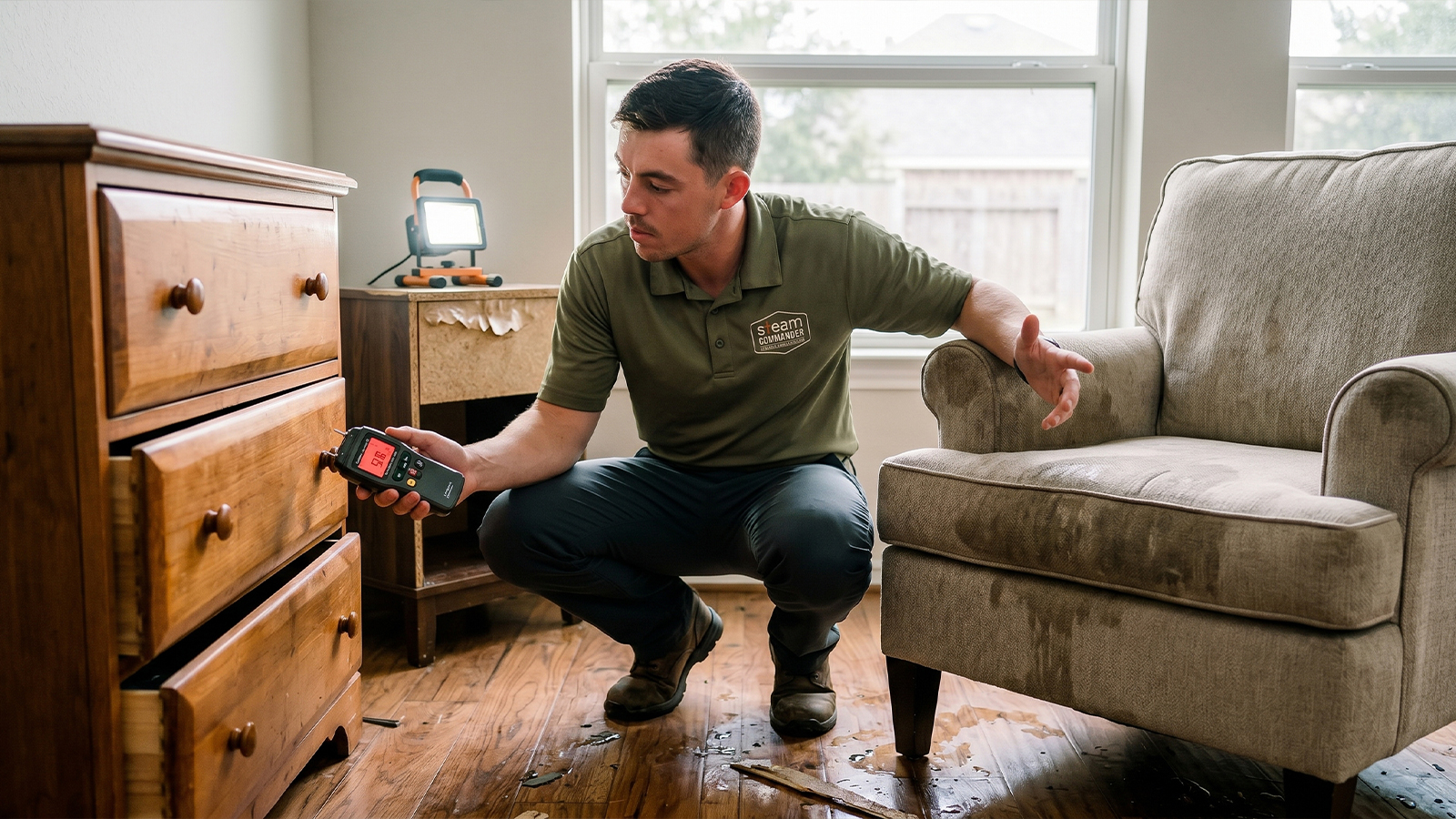
Wood furniture type matters just as much. Solid hardwood holds up well if reached quickly. Veneered MDF and particle board absorb moisture rapidly, swell from the inside out, and rarely survive full saturation. Upholstered pieces trap moisture inside cushion cores and frames in ways that make visual assessment completely unreliable — what looks dry on the surface can already be harboring active mold growth inside.
Flood-Damaged Furniture: A Salvageability Reference
The table below gives a general triage framework. A professional assessment is still required to confirm where any specific piece lands.
| Furniture Type | Salvageability | Key Risk | Professional Required? |
|---|---|---|---|
| Solid hardwood (structurally sound joints) | High — if reached within 24 hours | Warping and swelling, hidden moisture | Yes — to confirm moisture levels |
| Antique or heirloom wood pieces | Moderate — material-dependent | Finish loss, joint separation, value damage | Yes — amateur drying destroys appraised value |
| Veneered or laminate furniture | Low — delamination begins fast | Submerged layers separate irreversibly | Assessment needed; often not viable |
| Upholstered sofas and chairs | Low to none if submerged | Mold and mildew inside cushion core | Rarely salvageable after flood exposure |
| Metal frames and hardware | Moderate | Rust and structural weakening | Depends on depth of corrosion |
What the table cannot show is hidden moisture. Drawer cavities, hollow frames, and laminate layers hold saturation long after the surface feels dry. That gap between what you can see and what is actually happening inside the piece is exactly where restoration decisions go wrong.
Why DIY Repair Makes Water Damage Worse
The instinct to act is right. The methods most homeowners reach for are not.
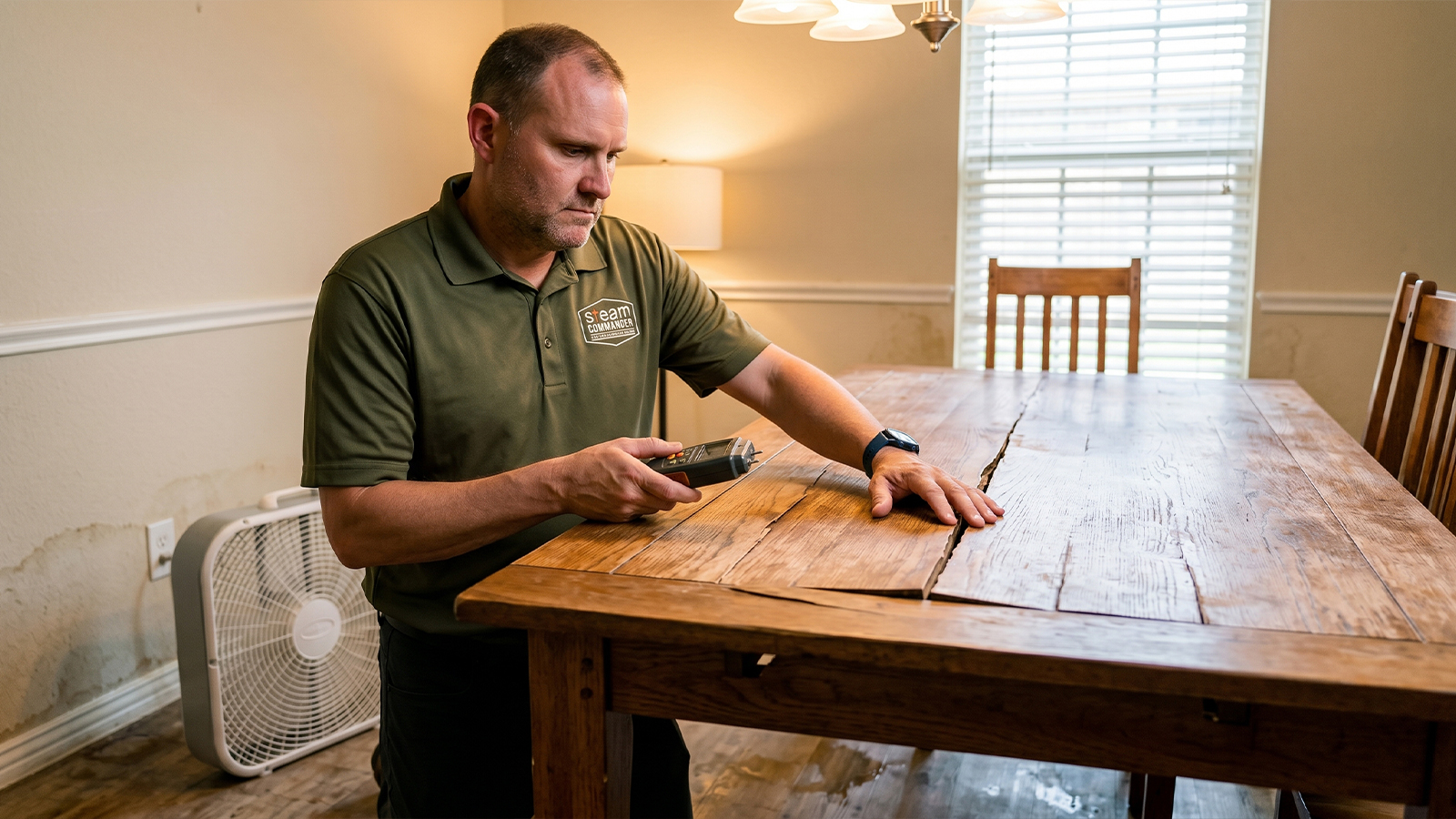
Drying wood furniture with fans or direct heat causes wood fibers to contract unevenly. The result is warping, cracking, and joint separation locked permanently into the piece — damage that woodworking professionals cannot undo after the fact. The piece that could have been salvaged becomes a write-off because it dried too fast.
The iron technique is worth addressing because many homeowners know it. Using a warm iron over a cloth to lift water marks from a finished surface is a legitimate method for minor surface discoloration on otherwise dry wood. Apply it to saturated furniture and you are pushing moisture deeper into the grain, accelerating a stain into the substructure, and causing damage that requires a full refinish to address. Store-bought wood cleaner has the same limitation — it works only on the finish layer, and on upholstered pieces it can seal moisture inside, creating exactly the damp conditions mold needs.
There is also an insurance angle most homeowners miss. Carriers frequently reduce or deny claims when policyholders attempt remediation before professional documentation. A professional assessment on day one protects your right to a full payout. A DIY drying attempt on day one can forfeit it.
Mold and Mildew: The Hidden Clock
By the time you see mildew on a piece of furniture, the infestation is already established beneath the surface. Within 48 to 72 hours, mold can spread from furniture to flooring and subfloor, turning a furniture problem into a full room damage restoration project.
Antique pieces are especially vulnerable — older adhesives, natural fiber upholstery, and unfinished interior surfaces give mold exactly what it needs. Damp conditions inside hollow frames can sustain that growth for weeks after the furniture appears dry on the outside. A moisture meter in trained hands is the only reliable way to know what is actually happening inside a piece.
Professional Damage Restoration: What a Certified Technician Actually Does
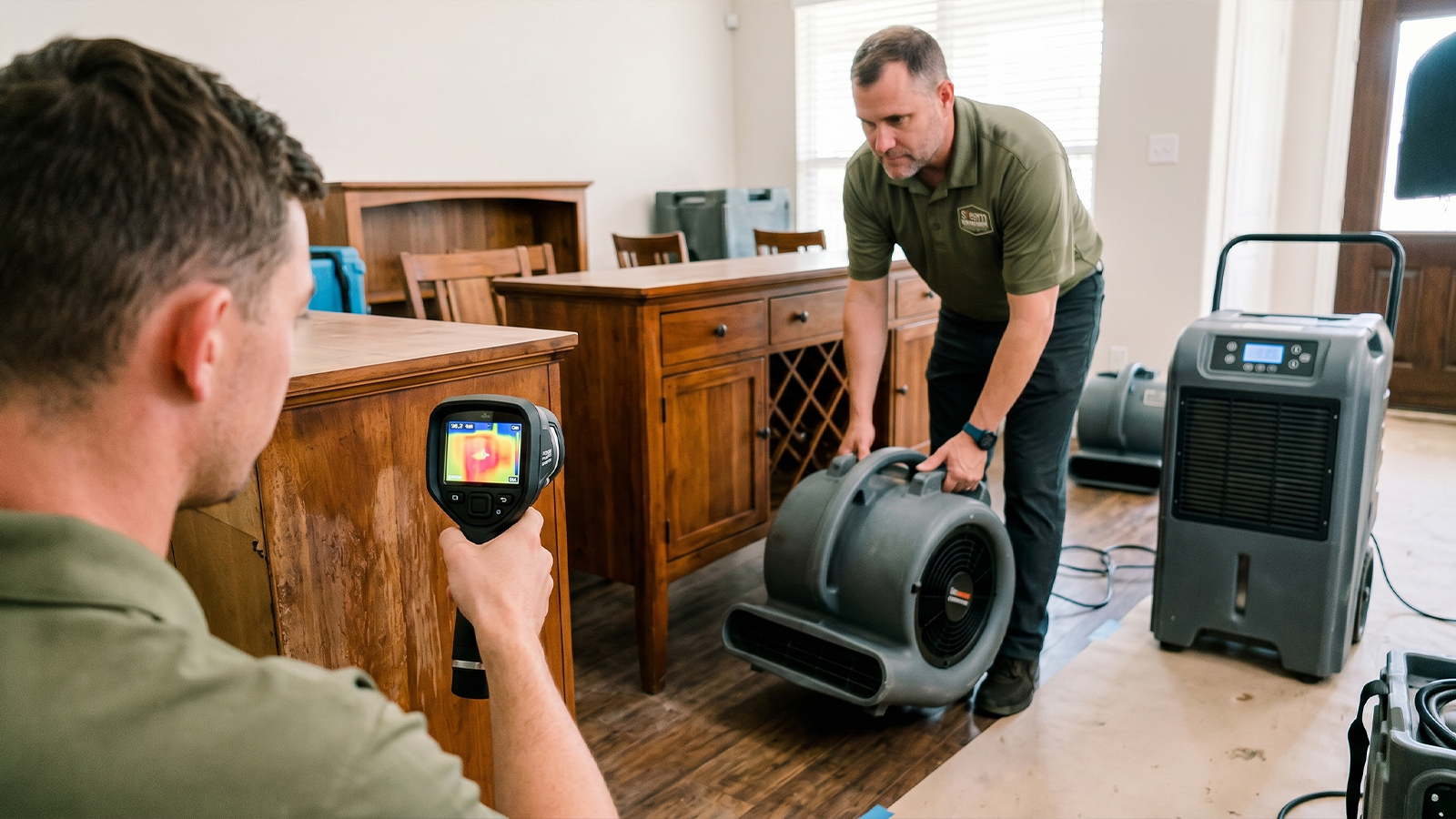
Professional restoration begins where visual inspection ends. Technicians use calibrated moisture meters to map saturation inside cavities, joints, and laminate layers that no homeowner can assess by touch or sight. Industrial drying equipment removes moisture at a controlled rate — slow enough to prevent the uneven contraction that causes warping, thorough enough to reach interior structures where mold takes hold.
For antique and high-value wood furniture, a restoration specialist evaluates whether joints need to be carefully disassembled and re-glued, whether the finish can be salvaged or requires a complete refinish, and whether the piece is structurally viable at all. Rust on metal hardware gets treated as part of the restoration rather than discovered later as structural failure. The documentation a professional produces — moisture readings, remediation records, damage assessments — is what insurance carriers require for a full claim.
When to Disassemble — and When Not To
Do not disassemble wet furniture. Swollen wood expanded into its joints will crack and split under force, destroying a piece that would otherwise have survived. A professional restoration technician knows when controlled disassembly is appropriate and when it causes irreversible damage. For antique furniture with original joinery, period construction requires specialist woodworking knowledge to reverse correctly — attempting it without that background is one of the fastest ways to permanently destroy both structural integrity and appraised value.
The Next Few Hours Are the Ones That Matter
The difference between a restored piece and a replacement is almost never the type of wood or how long it was submerged. It is how quickly a professional got involved. In Cypress during summer, the mold clock runs faster than most homeowners expect. That 48-hour window can shrink to 36. Once it closes, it does not reopen.
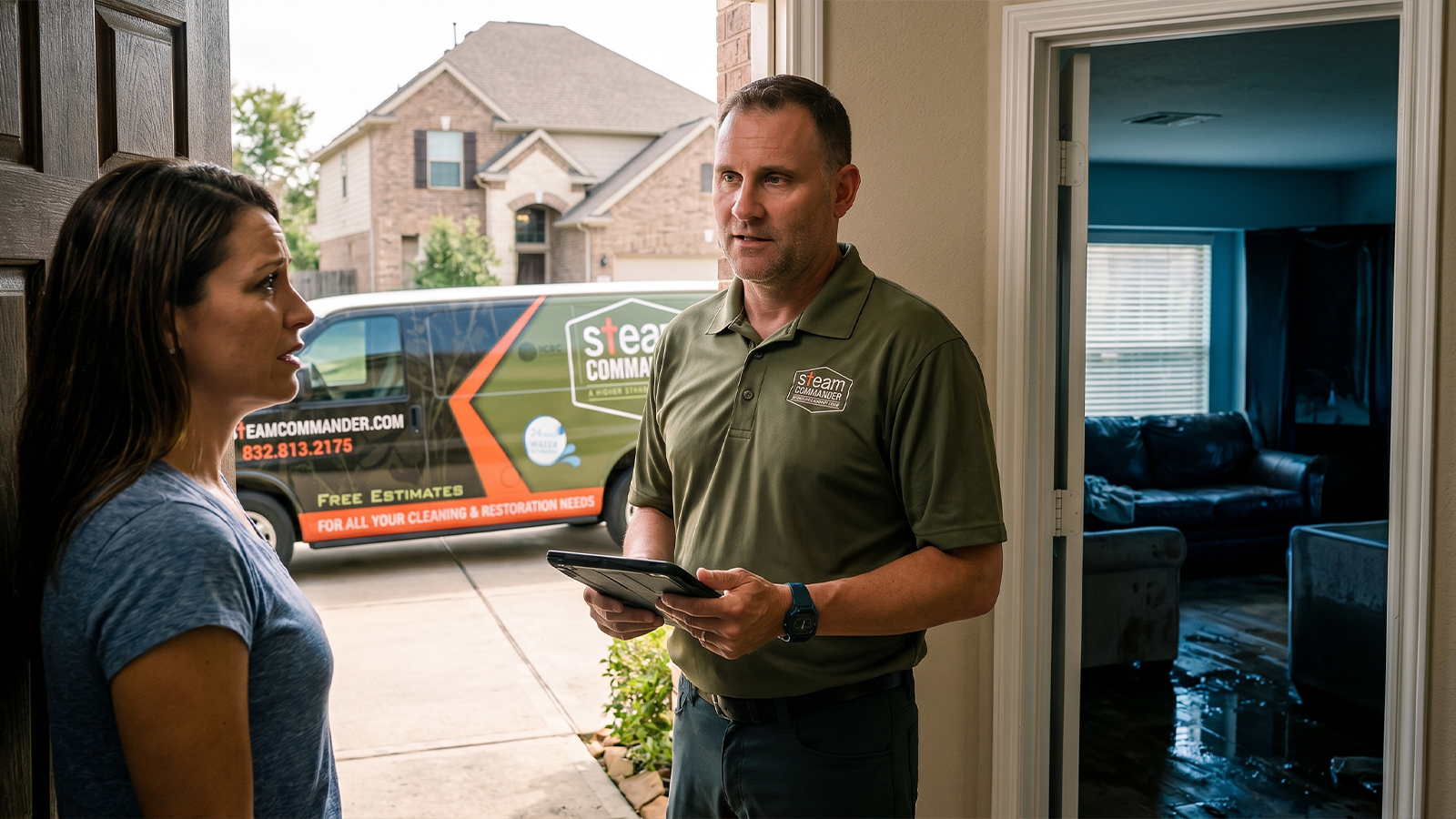
Steam Commander offers same-day response and a free on-site assessment for water-damaged furniture and interiors throughout Cypress and Harris County. A certified technician will tell you exactly what is salvageable, stop mold before it spreads beyond the furniture, and produce the documentation your insurance claim requires. Call (832) 813-2175 now — every hour you wait is an hour the damage works against you.
FAQ – Professional Restoration Services To Salvage Damp Furniture
Can solid wood furniture be restored after a flood?
Solid hardwood is the most salvageable material in a flood scenario, but timing is everything. Reached within the first 24 hours and dried under controlled conditions, restoration is realistic in many cases. The water type, joint construction, and how long the piece sat submerged all affect the outcome. A professional moisture assessment is the only reliable way to know what you are actually working with.
How quickly does mold grow in water-damaged furniture?
Mold can begin colonizing wood and upholstery within 24 to 48 hours of saturation, well before any visible sign or odor appears. In Cypress during summer months, Harris County’s humidity can compress that window to under 36 hours. By the time a piece smells or looks infected, the infestation is already established inside the substructure.
Will homeowners insurance cover water-damaged furniture?
Coverage depends on the policy and the cause of the water event. What many homeowners do not realize is that DIY remediation attempts made before professional documentation can reduce or void a claim entirely. Calling a professional restoration service first, before touching the piece, protects your documentation and your right to a full payout.
Is there any point trying to repair particle board furniture after flooding?
In most cases, no. Particle board and MDF absorb water rapidly, swell from the inside, and delaminate in ways that cannot be structurally repaired. A professional assessment can confirm this on-site and provide documentation to support an insurance claim for replacement.
Can the iron method fix water stains on wood furniture that got wet in a flood?
The iron-and-cloth method is appropriate for minor surface water marks on otherwise dry, finished wood. It uses heat to lift trapped moisture from the finish layer. It is not appropriate for furniture that has been fully saturated — on a soaked piece, the heat drives moisture deeper into the grain, worsens the stain, and can cause damage that requires a complete refinish to address.
What should a homeowner do first when furniture gets wet?
Move the piece away from standing water if it is safe to do so, then call a professional restoration service immediately. Do not use fans, heaters, or household drying methods. Do not apply any surface cleaner to upholstered pieces. Do not attempt to force open swollen drawers or doors — the pressure can split the wood permanently. Every hour of delay narrows the window for successful restoration.
Can antique furniture be restored after water damage?
Yes, but it requires a specialist. Antique wood furniture uses construction techniques, adhesives, and finishes that respond to moisture differently than modern pieces. Attempting to dry or refinish an antique without specialist knowledge can permanently reduce its appraised value in ways that even experienced conservators cannot reverse. If the piece matters to you, calling a professional restoration service is the only responsible first step.